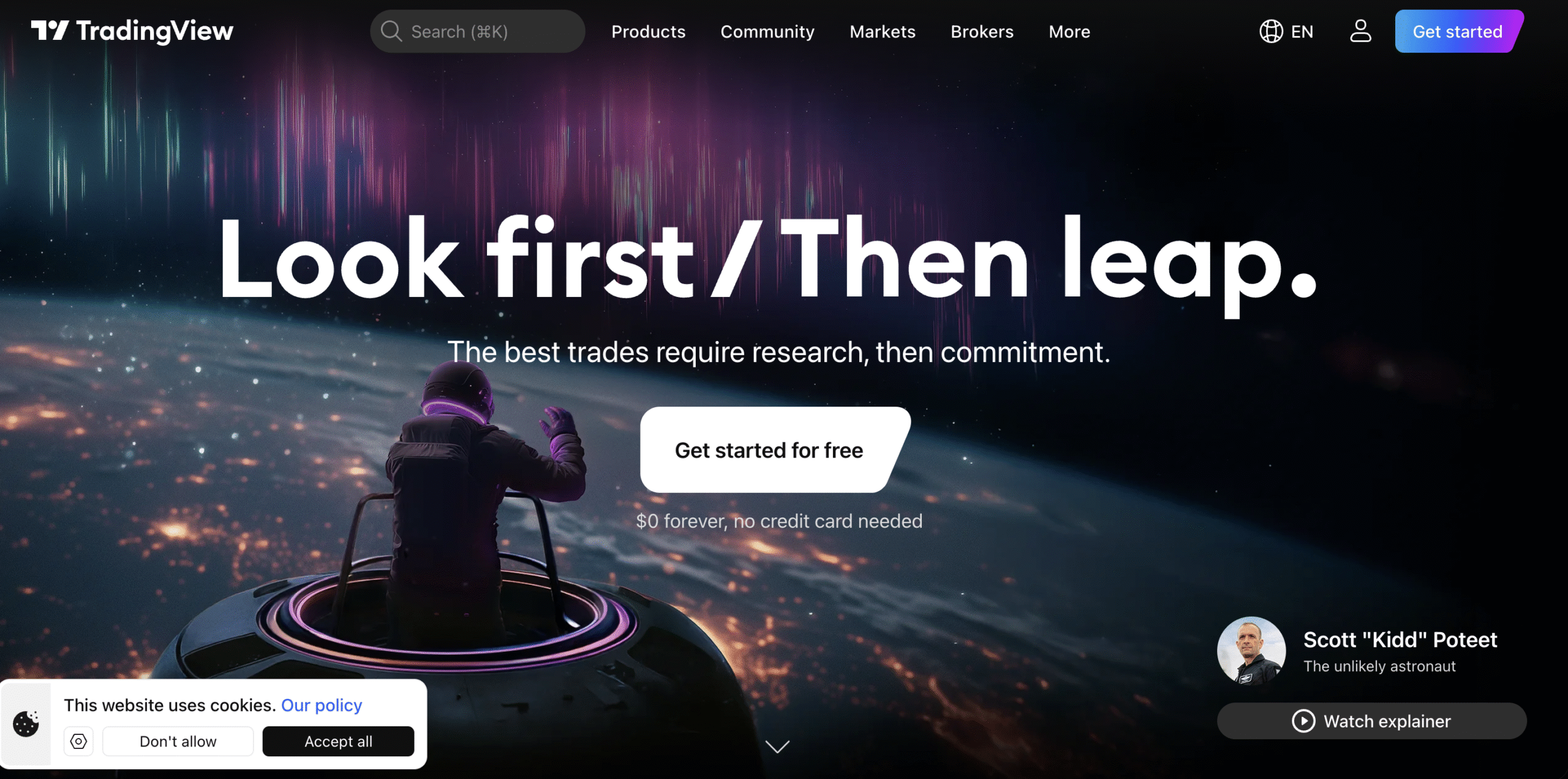
TradingView.com has become a household name in modern trading. From YouTube tutorials to Discord servers, from crypto influencers to professional analysts, its charts dominate the screen. Clean visuals, endless indicators, real-time alerts, and a global trading community make it feel like the ultimate command center.
Yet beneath the polished interface lies a very different experience for many users—one shaped by billing shocks, hidden limitations, unreliable moderation, and a growing shadow economy of impersonation scams.
TradingView is not a fake company. Its tools are real. Millions use them daily.
But the experience often feels far removed from the promise.
These are the five brutal realities most traders only discover after they’ve already committed.
The trading world is full of tools that promise to make analysis easier and trading smarter. Among them, TradingView.com has become one of the most popular charting and analysis platforms used by millions of traders around the world. It offers advanced charting, real-time data, community “ideas,” and easy-to-use technical indicators — all wrapped in an attractive interface.
However, as its popularity has grown, so have complaints. Across forums and review platforms, users have raised red flags about billing issues, misleading pricing, unreliable support, and even outright scams impersonating TradingView’s brand. These concerns have left many asking: Is TradingView a legitimate platform, or is it a scam disguised as a trading tool?
In this detailed review, we’ll take a deep dive into:
-
What TradingView.com claims to offer.
-
The major complaints and red flags users report.
-
The company’s official stance and responses.
-
A balanced analysis — is it a scam or just misunderstood?
-
Key factors to check before signing up.
-
Final conclusions on whether TradingView is worth your trust.
The First Reality: TradingView.com Is Not a Trading Platform
Despite how it feels, TradingView.com is not a broker. It doesn’t execute your trades. It doesn’t hold funds. It doesn’t guarantee prices. It’s an analysis and visualization layer.
For experienced traders, that’s obvious. For newcomers, it’s not.
Many first-time users interpret the polished charts and real-time motion as “the market itself.” They assume the data is definitive, the candles are authoritative, and the interface is neutral. In practice, TradingView.com is a data aggregatorand display engine layered on top of third-party feeds. What you see depends on:
-
Your subscription tier
-
The exchange you selected
-
Whether that exchange requires paid data
-
The refresh latency of your plan
Two people can look at the “same” market on TradingView.com and see meaningfully different information.
The Second Reality: “Free” Is a Framing Device
The free tier on TradingView.com is functional—but intentionally incomplete.
Limits on indicators, alerts, layouts, and refresh speed are designed to create friction. That friction isn’t hostile; it’s behavioral. Each constraint nudges users toward paid plans, and each upgrade reveals a new layer of “almost complete” access.
The surprise comes later.
Many users upgrade expecting finality—that once they pay, they now have “real” market data. Instead, they discover that real-time data for major exchanges often requires additional subscriptions. Premium doesn’t mean universal. It means closer.
This is where frustration often begins. The platform never lies, but it frames. The mental model users build (“I paid, so I’m done”) collides with the operational model (“You paid for the interface, not the feeds”).
That mismatch feels deceptive even when it isn’t technically false.
The Third Reality: TradingView.com Shapes Behavior
TradingView.com isn’t passive. Its design encourages specific habits:
-
Constant chart checking
-
Rapid indicator switching
-
Frequent alert creation
-
Social comparison through public ideas
Over time, users internalize a loop:
See movement → Adjust → React → Re-check.
The platform makes markets feel immediate, even when your actual trading cadence doesn’t require immediacy. This can subtly compress decision cycles and encourage over-analysis.
For some traders, this is empowering. For others, it quietly amplifies anxiety and impulsivity.
A charting tool that feels alive changes how risk is perceived.
The Fourth Reality: The Social Layer Is Not Education
TradingView.com’s idea stream is one of its most magnetic features. It feels like standing on a global trading floor, watching thousands of minds interpret the same movement.
But the idea feed is not curated by outcome quality. It’s surfaced by engagement.
That means:
-
Bold predictions outperform careful analysis
-
Confident language outperforms uncertainty
-
Dramatic visuals outperform nuance
New traders often mistake visibility for credibility. A chart with thousands of likes feels authoritative. In reality, it’s persuasive.
This is how the platform becomes a distribution channel for untested strategies, recycled narratives, and performance theater. The ideas are not wrong—but they are not vetted.
The risk is not that bad ideas exist. The risk is that they feel endorsed by the platform itself.
The Fifth Reality: Billing Friction Erodes Trust
A significant portion of TradingView.com’s criticism doesn’t come from charts—it comes from billing.
Common user experiences include:
-
Auto-renewals that weren’t mentally registered
-
Difficulty locating cancellation controls
-
Confusion over data add-ons
-
Delayed responses from support
None of these are unique in SaaS. What makes them painful is context. TradingView.com is used in high-stakes environments. Traders associate it with precision and control. When billing feels opaque, it contradicts the platform’s perceived professionalism.
This is why some users escalate from “annoyed” to “betrayed.” The product feels like infrastructure. Infrastructure is expected to be boring, predictable, and fair.
Billing friction breaks that psychological contract.
The Sixth Reality: Brand Authority Attracts Impostors
Because TradingView.com is widely trusted, it has become a magnet for impersonation scams. Fake sites, cloned apps, and fraudulent “premium offers” circulate across search results and social platforms.
Victims often believe they are dealing with TradingView.com itself.
This is where many people first encounter the broader ecosystem of online trading risk. They don’t start with a fake broker. They start with a tool they already trust.
Understanding how to verify trading platforms before engaging is now essential, even when the brand feels familiar. Resources on how to verify investment platforms properly exist precisely because reputation alone is no longer protection.
The Seventh Reality: TradingView.com Feels Like Authority
This is the core tension.
TradingView.com looks official. It moves like infrastructure. It speaks in the visual language of institutions. Over time, users subconsciously elevate it from tool to reference point.
When a chart on TradingView.com contradicts a broker feed, many users assume the broker is wrong. When a TradingView indicator disagrees with price action, they question the market, not the tool.
That inversion of authority is subtle—and powerful.
Tools should serve judgment, not replace it.
Where Friction Turns Into Risk
Most dissatisfaction with TradingView.com doesn’t arise from any single feature. It arises from accumulation:
-
Expectation vs. structure
-
Interface vs. reality
-
Authority vs. limitation
-
Trust vs. friction
When those layers misalign, users start asking whether they’re being misled. Not because TradingView.com is fraudulent—but because the experience feels like a promise that keeps shifting.
For traders already navigating unregulated brokers, aggressive marketing, and opaque platforms, that emotional signal matters. It’s why many people who later experience fraud begin their story with, “It started when I trusted a platform that felt professional.”
Understanding what happens after financial deception is important precisely because these moments rarely begin with obvious scams. They begin with misplaced certainty. Guides on what steps exist after financial deception exist because trust now fails in stages.
What the Charts Don’t Tell You
TradingView.com is a powerful instrument. It is also a persuasive one.
It doesn’t steal. It doesn’t vanish. It doesn’t fabricate markets. But it frames reality so effectively that many users stop distinguishing between interface and truth.
The platform is not dangerous. Unexamined trust is.
If you treat TradingView.com as a lens rather than a source—an aid rather than an authority—it remains one of the most capable analysis environments available. If you treat it as the market itself, its elegance can quietly outrun your skepticism.
In modern trading, the first risk is rarely the chart.
It’s the confidence the chart inspires.