
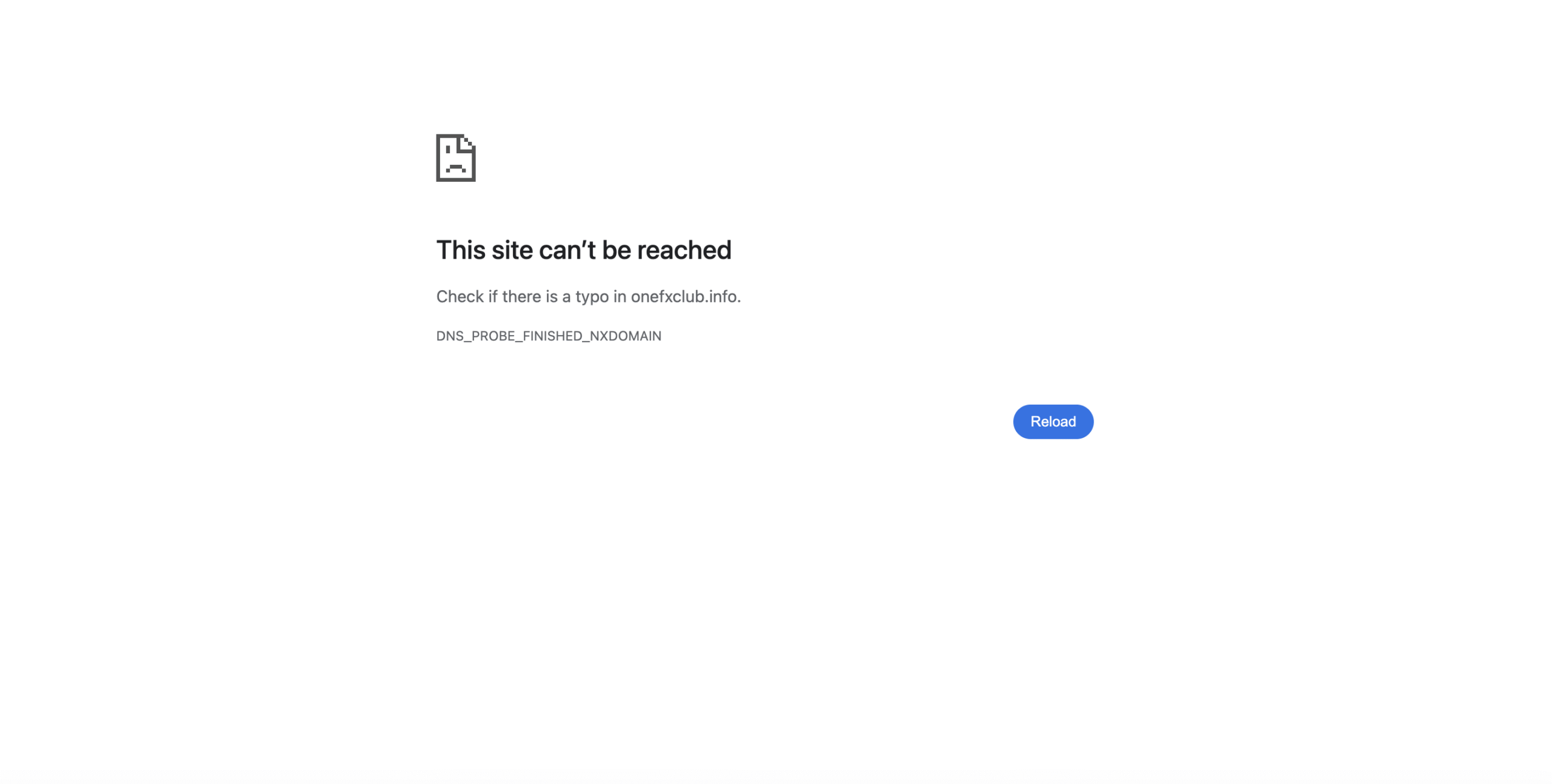
In recent months, the platform operating under the domain Onefxclub.info (hereafter referred to as OneFXClub) has drawn attention from multiple online forums, review sites, and investor complaint threads. This blog post provides a well-detailed review of OneFXClub — how it operates, the red flags it displays, first-hand user reports, regulatory status (or lack thereof), and steps you should take if you are considering this platform or have already interacted with it. The goal is to give you a comprehensive overview so you can make informed decisions — spoiler: this platform is highly risky and likely a scam.
People rarely arrive at a platform like Onefxclub.info because they are reckless. Most come through curiosity, a recommendation, or a well-placed ad that appears at the exact moment they’re thinking about earning more from their money. The site looks modern. The promises feel measured. The language sounds professional. Nothing about the first encounter feels absurd.
That is what makes experiences like this difficult to talk about. When confidence breaks, it doesn’t shatter all at once. It erodes in stages.
This article is written for readers who want clarity, not drama. It’s not a legal judgment. It’s a reconstruction of how OneFXClub presents itself, how people actually experience it, and why that gap matters.
The surface experience
Open OneFXClub.info and you’re met with the familiar vocabulary of online trading:
-
“Smart” investment paths
-
“Expert-managed” strategies
-
A promise of accessibility for beginners
-
Clean dashboards showing balances and movement
Nothing here is unique. That is deliberate. The language mirrors hundreds of legitimate broker sites. The design borrows from established fintech aesthetics. The goal is not to stand out — it is to blend in.
For someone exploring online trading for the first time, this feels reassuring. It doesn’t scream “get rich.” It suggests guidance. Structure. A system.
And that is where trust begins.
Where expectation meets friction
Most user stories follow a similar arc:
-
A small deposit
-
Access to a personal dashboard
-
Early signs of growth
-
Friendly communication from “support”
-
Encouragement to scale up
At this stage, nothing feels wrong. Some users even report a successful small withdrawal. That moment is powerful. It confirms that the system “works.” Doubt fades.
The shift usually happens later.
Requests to withdraw larger sums don’t move as quickly. Responses become slower. New requirements appear:
-
Additional identity checks
-
Processing steps
-
Fees framed as “tax,” “liquidity,” or “clearance” costs
Each step is presented as procedural, not obstructive. The language is calm. Technical. Reasonable on the surface.
This is the point where confidence begins to strain.
The structural problem
Legitimate brokers operate under regulatory frameworks. That doesn’t make them perfect, but it gives users recourse:
-
Named corporate entities
-
Registration numbers
-
Jurisdictional oversight
-
Formal complaint channels
OneFXClub does not provide verifiable equivalents.
The platform does not clearly disclose:
-
A licensed operating entity
-
A regulatory body
-
A physical office tied to oversight
-
Executives with traceable histories
This absence isn’t cosmetic. It changes the entire risk profile.
When a regulated broker delays a withdrawal, there is a framework for escalation. When an unregulated platform delays, the user has no neutral authority to appeal to.
The relationship becomes asymmetric.
The illusion of internal reality
Another common element in user accounts is the internal trading environment itself.
The charts, balances, and performance metrics exist entirely within Onefxclub.info’s system. They are not directly linked to a public market feed that users can independently verify. That means:
-
Gains are representational, not necessarily real
-
Trades cannot be audited externally
-
Performance cannot be reconciled with known exchanges
In regulated platforms, your account reflects activity on real markets. Even if you lose money, the transactions are traceable.
Here, users are asked to trust a closed loop.
That doesn’t automatically prove wrongdoing. But it creates a condition where the platform controls the narrative of performance without external reference.
Trust becomes the only verification layer.
How pressure appears without shouting
One of the reasons people don’t immediately walk away is that the pressure is subtle.
It doesn’t sound like coercion. It sounds like guidance.
-
“This tier unlocks better performance.”
-
“You’re close to qualifying for the next level.”
-
“Timing matters in this market.”
These phrases are framed as advice. They mirror how legitimate advisors speak.
But over time, users notice that:
-
Growth plateaus unless they deposit more
-
Withdrawal attempts redirect into new requirements
-
The path forward always involves adding funds
There is no equivalent “exit lane” with equal clarity.
That imbalance is what changes the emotional tone of the experience. What began as opportunity starts to feel like obligation.
When users start searching
The first real fracture usually happens off-platform.
People begin typing questions into search engines:
-
“Is Onefxclub.info regulated?”
-
“Onefxclub.info withdrawal problem”
-
“Has anyone been paid by Onefxclub.info?”
This is often when they encounter discussions, complaints, and regulatory notes from unrelated sources.
The discovery isn’t always immediate. But once a user realizes that the platform exists largely in isolation — with no recognized authority standing behind it — the entire experience re-contextualizes.
What once felt like a structured system begins to resemble a closed environment.
Why this pattern repeats
Platforms like this don’t rely on technical complexity. They rely on behavioral design.
Three elements keep users engaged:
-
Incremental commitment – starting small lowers psychological barriers
-
Controlled success – early wins build emotional investment
-
Procedural framing – obstacles feel administrative, not adversarial
By the time friction becomes undeniable, users are already invested — financially and emotionally.
Walking away doesn’t just mean losing money. It means admitting that trust was misplaced. That’s hard.
The broader landscape
Onefxclub.info isn’t operating in a vacuum. It sits within a wider ecosystem of look-alike platforms that share:
-
Similar interface structures
-
Nearly identical language
-
Repeating operational patterns
-
Short domain lifespans
Understanding this pattern helps people separate appearance from structure.
A polished site is not proof of legitimacy. A functioning dashboard is not proof of market participation.
Verification happens outside the platform.
For readers who want a framework for examining whether a trading site actually stands on regulated ground, there is a guide that walks through how to evaluate a platform’s legitimacy using public records and structural markers:
understanding how to confirm whether a trading service truly operates under oversight
That process is what most users only discover after something feels wrong.
Confidence rarely collapses in one moment. It thins. It hesitates. It asks questions.
And that’s where this story continues.
OneFXClub.info: The Point Where Confidence Breaks
When doubt finally sets in, it doesn’t feel dramatic. It feels quiet.
Most users don’t storm out. They pause. They reread emails. They check their dashboard again. They tell themselves the delay is normal. That the extra step is standard. That this is how “real finance” works.
This is the space where many people remain stuck — not fully trusting, but not ready to abandon what they’ve already put in.
And that space is where loss becomes most likely.
The turning point most people recognize too late
There is usually a single request that feels different:
-
A “processing” fee to unlock a withdrawal
-
A “tax clearance” requirement paid in advance
-
A “liquidity” charge to finalize a transfer
The language varies, but the logic is the same:
You cannot access your own balance until you send more money.
In regulated finance, fees are deducted from the balance being withdrawn. You don’t wire new funds just to receive what already belongs to you.
This is the moment many users realize something is structurally wrong.
Not emotionally wrong. Structurally.
Because the system no longer behaves like finance — it behaves like a gate.
Why this feels convincing in the moment
Scam models succeed because they mimic real-world complexity.
Finance is bureaucratic.
Compliance does involve documentation.
Transfers can take time.
So when a platform introduces friction, it feels plausible.
What users don’t realize is that legitimate brokers:
-
Publish their fee structures publicly
-
Deduct costs from existing balances
-
Provide transaction references
-
Operate under named authorities
Onefxclub.info does none of this in a verifiable way.
Every step happens inside its own ecosystem.
Every explanation comes from the same source.
Every delay is interpreted by the same party that benefits from it.
There is no external anchor.
The emotional trap
By the time users reach this phase, they often feel:
-
Embarrassed
-
Defensive
-
Uncertain about what is “normal”
-
Reluctant to tell others
That silence is powerful.
It isolates people at the exact moment they most need perspective.
Many don’t search for help because they fear confirming what they already suspect.
Others double down, thinking:
“If I just clear this last step, I’ll get everything back.”
That belief is understandable.
It is also what sustains the cycle.
What separates real platforms from constructed ones
There is a simple test that reveals more than design ever will:
Can this company be independently located in the real world?
That means:
-
A registered legal entity
-
A regulator that acknowledges them
-
A jurisdiction with enforceable rules
-
A history that extends beyond the domain
When any of those are missing, the user is not dealing with a broker — they are dealing with a system operator.
The difference matters.
A broker is accountable to law.
A system operator is accountable only to itself.
If you’ve never walked through how to check this, there is a neutral breakdown here that shows how legitimate trading firms leave public footprints you can verify:
how to distinguish a real broker from a constructed platform
Most people never learn this until after trust has already been spent.
When people try to leave
Users who stop sending funds usually notice a pattern:
-
Communication becomes colder
-
Replies slow down
-
The tone shifts from guidance to formality
-
Support references “policy” without citing anything external
Some accounts go dormant.
Others remain visible but frozen.
The dashboard still shows the balance.
The numbers still exist.
But access is gone.
This creates a surreal experience:
You can see what you believe is yours — and yet it is unreachable.
That psychological tension is one of the most powerful elements of these systems.
It keeps people engaged long after trust has broken.
The wider impact
Platforms like Onefxclub.info don’t just affect individuals.
They:
-
Undermine trust in legitimate online investing
-
Make newcomers fearful of real brokers
-
Spread misinformation about how finance works
-
Normalize opaque behavior
Every person who leaves feeling burned becomes more vulnerable to the next promise — either chasing recovery or avoiding all opportunity.
That’s how damage compounds.
What clarity actually looks like
Clarity isn’t panic.
It isn’t anger.
It isn’t even certainty.
It’s the moment someone stops asking:
“What do they want from me?”
And starts asking:
“What structure am I inside?”
Because in real finance, the structure protects the user.
In constructed systems, the structure contains them.
Understanding that difference is what breaks the spell.
Evidence Against Onefxclub.info — Summary
| Category | Evidence |
|---|---|
| Regulation | Not licensed or registered with major financial regulators. |
| Website Credibility | Domain very new; company information missing; website has accessibility issues. |
| Withdrawal Issues | Users report frozen accounts, stalling tactics, and demands for extra fees. |
| Unrealistic Promises | Guaranteed returns and risk-free trading claims. |
| Reviews | Consistent negative reports and user complaints of fraud. |
Given this evidence, it is highly likely that OneFXClub is a fraudulent platform.
What changes after belief fades
Once users stop trusting the narrative, three things typically happen:
-
They attempt a firm withdrawal request
-
They stop sending additional funds
-
They look for outside confirmation
This is where the model reveals itself.
Instead of clarity, they receive:
-
Vague “departmental” delays
-
Policy references with no public source
-
Reassurances that sound automated
-
Silence
The platform doesn’t escalate — it deflects.
That’s not how regulated entities respond.
It’s how closed systems maintain control.
The illusion of balance on Onefxclub.info
One of the most powerful tools in these environments is the dashboard itself.
It looks real.
It updates.
It shows growth.
But it has one critical difference from a real trading account:
It is not anchored to any external clearing house.
There is no brokerage ledger.
No third-party custodian.
No regulatory reporting layer.
What users are seeing is not a reflection of capital — it’s a simulation of ownership.
The numbers feel personal because the effort was personal.
But the structure is internal.
This is why “fees” must be paid from outside the system.
The system itself cannot release what it does not truly hold.
Why people hesitate to speak out about Onefxclub.info
Even after doubt forms, many users remain silent.
Not because they don’t suspect wrongdoing — but because:
-
They feel responsible
-
They fear judgment
-
They worry they missed something obvious
-
They hope they’re still wrong
Scams thrive in quiet.
Every day someone delays asking a question, the narrative stays intact.
That’s why independent validation matters.
Reading how others describe the same patterns is often what breaks isolation. If you’ve never compared your experience with those of other victims, this collection of real-world accounts shows how identical the progression often is:
documented patterns from similar trading schemes
Recognition is powerful.
It replaces confusion with context.
The difference between recovery myths and reality
Once people accept the structure is flawed, a new risk appears: false recovery promises.
Scam ecosystems don’t end with the original platform.
They are followed by impersonators:
-
Fake “investigators”
-
Paid Telegram “agents”
-
Guaranteed retrieval offers
Real recovery is procedural, not magical.
It involves:
-
Documentation
-
Payment trail analysis
-
Jurisdictional limits
-
Law enforcement coordination
There are no instant reversals.
There are no secret keys.
Any service that promises certainty is repeating the same pattern under a new name.
If you want to understand what legitimate recovery actually involves, this guide explains the real mechanics behind fund tracing and chargeback pathways:
how financial recovery actually works in fraud cases
Clarity protects twice — first from the scam, then from the echo of it.
Where control returns
The platform’s power comes from ambiguity.
Your power comes from structure.
That means:
-
Preserving every record
-
Saving communication threads
-
Capturing dashboard states
-
Not sending additional funds
-
Shifting from hope to process
The goal is not emotional closure.
It is practical positioning.
Once you stop negotiating inside their system, the dynamic changes.
You are no longer a participant.
You become a recorder.
And systems built on narrative collapse when narrative no longer works.
The final shift
The breaking point is not when money is lost.
It’s when authority moves.
From them — to you.
That moment doesn’t restore what’s gone.
But it restores agency.
And that is where the cycle ends.
Not in rage.
Not in fear.
But in clarity.