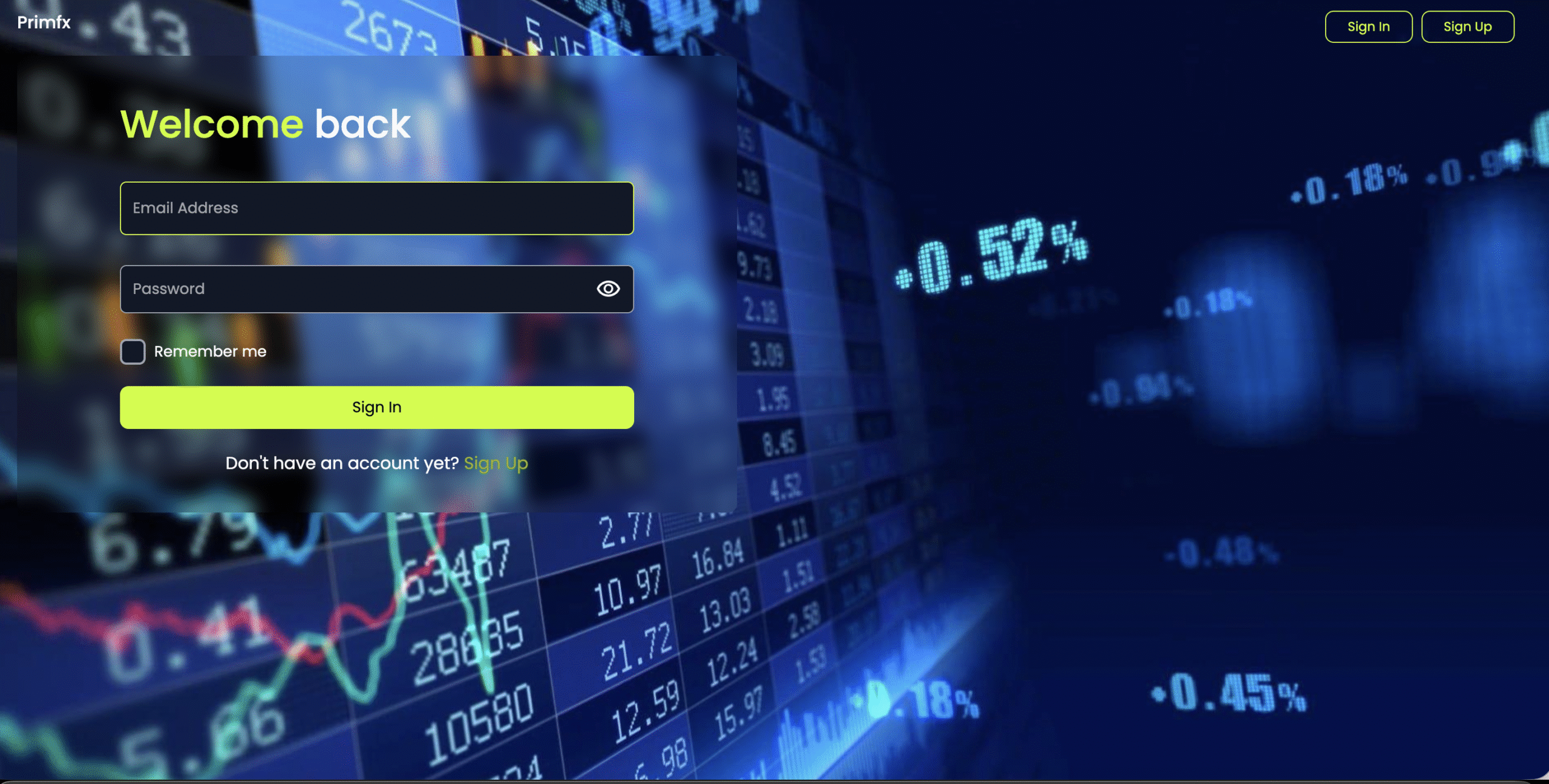
In the online investment world, slick websites promising sky-high returns with little risk are far from rare. One of the more concerning cases in recent months involves GlobalWildStar, operating via domains like globalwildstar.com and globalwildstar.net. While the platform presents itself as a legitimate trading and investment site, multiple warning signs suggest that it aligns with classic scam patterns.
In this blog, we’ll explore:
-
What GlobalWildStar claims to offer
-
Key red flags and suspicious characteristics
-
Official regulatory warnings
-
Real user experiences
-
How the scam likely operates
-
Preventive measures for investors
By the end, it should be clear why experts consider GlobalWildStar a high-risk platform and why caution is essential.
There is a particular confidence baked into modern investment platforms. It’s not aggressive. It doesn’t shout. It hums quietly beneath the surface, embedded in color choices, animation timing, and the phrasing of small interface prompts. GlobalWildStar enters the scene wearing that confidence. The homepage doesn’t plead for attention. It assumes it deserves it.
That assumption is the first thing worth examining.
Because platforms are not neutral spaces. They are systems. Every system has a direction. Some are built to help users navigate complexity. Others are built to keep users inside complexity long enough to forget who controls it.
GlobalWildStar sits at that intersection. It looks like a trading platform. It behaves like an onboarding funnel. And over time, it begins to feel less like a tool and more like a corridor.
This article is not interested in labels. It is interested in structure: how the platform is shaped, what it makes easy, what it complicates, and what kind of relationship it creates between itself and the person on the other side of the screen.
The First Impression Is the Product
GlobalWildStar does not introduce itself as a learning environment. It introduces itself as momentum.
From the first interaction, the user is positioned as someone already late to something that is already moving. The interface implies that opportunity is active now. Not soon. Not after training. Now.
This posture changes how the visitor behaves.
Instead of asking “What is this?”, the visitor is nudged toward “How do I join?”
Language reinforces that shift:
-
“Activate your account in minutes.”
-
“Start trading instantly.”
-
“Your journey begins here.”
Nothing here is overtly false. What’s notable is what’s missing: friction, delay, skepticism.
A stable financial environment slows the user down.
This one accelerates them.
That acceleration is not a side effect. It is the function.
A Platform Without a Home
One of the most revealing traits of any financial service is where it lives.
Not visually. Legally.
Established brokers root themselves in jurisdictions. They publish registration numbers. They accept being found. They allow users to verify that a real entity stands behind the interface.
GlobalWildStar resists that anchoring.
The domain is recent. Ownership details are obscured. Corporate identifiers are vague or absent. There is no public trail leading to a verifiable business structure that can be checked against official registries.
This absence doesn’t prove anything on its own. But it defines the relationship.
A platform without a home does not belong anywhere.
And a platform that belongs nowhere cannot be pursued anywhere.
For readers unfamiliar with how legitimacy is normally established, a short guide on how brokers are independently verified clarifies what a regulated structure actually looks like in practice.
GlobalWildStar offers atmosphere instead of structure. It gestures toward legitimacy without binding itself to it.
That is a design choice.
Momentum as Environment
Many users describe the same early rhythm.
Registration is smooth.
Contact is immediate.
A “manager” appears quickly.
Communication feels personal.
The dashboard begins to move.
Balances rise. Charts animate. The interface performs activity. The platform feels alive.
This stage is rarely dramatic. It is comfortable.
The user is not being rushed. They are being accompanied.
That distinction matters. Pressure triggers resistance. Accompaniment triggers trust.
The platform does not say, “Deposit now.”
It says, “Here’s what’s possible.”
Once that possibility feels personal, hesitation begins to feel like self-sabotage.
The environment teaches a lesson: action equals progress.
And once that lesson is internalized, waiting feels like falling behind.
The Inversion Point
Every system reveals its nature when the user tries to reverse direction.
Not dramatically. Just slightly.
A small withdrawal request.
A pause.
A question.
This is where narratives shift.
What was fluid becomes procedural.
What was personal becomes technical.
What was instant becomes conditional.
New requirements appear.
Additional steps emerge.
Processing timelines stretch.
The user is no longer moving forward. They are navigating a maze.
This inversion is structural. It is not about any single policy. It is about orientation.
The platform is optimized for entry.
It is not optimized for exit.
A healthy broker treats withdrawal as routine.
A fragile platform treats it as an exception.
That asymmetry defines the experience more than any marketing promise.
Behavioral Architecture Of GlobalWildStar.com
GlobalWildStar reflects a specific behavioral design:
-
Reduce hesitation at entry.
-
Replace uncertainty with guidance.
-
Simulate progress visually.
-
Escalate commitment.
-
Complicate disengagement.
Each stage feels reasonable in isolation.
Together, they form a corridor.
The user does not feel trapped.
They feel involved.
Language does the work:
-
“Your account is positioned well.”
-
“This is an optimal window.”
-
“We can unlock more potential.”
These phrases do not threaten. They steer.
They frame decisions as collaborative rather than individual. Responsibility begins to blur. Outcomes feel shared.
Over time, the platform stops feeling like a service.
It begins to feel like a relationship.
And relationships are harder to leave than websites.
Regulation as Atmosphere
On regulated platforms, oversight is external. It constrains behavior. It enforces boundaries.
On GlobalWildStar, the idea of regulation appears more as mood than structure.
There is no verifiable license tied to a major authority.
There is no public regulator overseeing dispute resolution.
There is no jurisdiction where a user can reasonably expect recourse.
What exists instead is suggestion.
Logos.
Generic compliance language.
References without anchors.
This creates the feeling of safety without the mechanism of it.
For a new trader, the difference is invisible.
For an experienced one, it is foundational.
Atmosphere reassures.
Structure protects.
GlobalWildStar offers the former.
The Function of Multiple Domains
The appearance of parallel domains—such as a .net variant alongside the primary site—adds another layer.
In stable operations, a domain represents a long-term home.
In fragile operations, domains are interchangeable shells.
Multiple domains allow continuity without permanence. If one is flagged or disrupted, another can assume the role. The brand persists while the infrastructure shifts.
This is not inherently malicious. But in combination with opaque ownership and unverified licensing, it signals impermanence by design.
A user’s capital becomes the only fixed element in a moving system.
The Emotional Cost of Ambiguity
The most consistent thread in user narratives is not outrage.
It is uncertainty.
People describe:
-
Not knowing why a request is delayed.
-
Not understanding a new requirement.
-
Being unsure whether a balance reflects reality.
-
Feeling pressured without being threatened.
Ambiguity is exhausting. It keeps the user engaged in resolution rather than reflection.
Every unanswered question extends involvement.
Every partial response resets hope.
The mind stays inside the system, trying to solve it.
This is where time becomes leverage.
What Stability Looks Like
A comparison clarifies the contrast.
A stable broker:
-
Publishes a legal identity.
-
Anchors itself to a regulator.
-
Makes withdrawal procedures explicit.
-
Separates support from sales.
-
Allows silence without penalty.
These features reduce emotional dependence. They allow the user to remain autonomous.
GlobalWildStar’s environment moves in the opposite direction.
It merges guidance with persuasion.
It replaces clarity with process.
It frames delay as progress.
The result is not immediate loss.
It is prolonged uncertainty.
Reading a Platform as a System
Rather than asking whether GlobalWildStar is “good” or “bad,” a more useful question emerges:
What behavior does this system reward?
-
Quick deposits.
-
Responsiveness to prompts.
-
Trust in internal metrics.
-
Continued engagement.
And what does it complicate?
-
Withdrawal.
-
Detachment.
-
Independent verification.
-
Disengagement.
A platform reveals itself not by what it says, but by what it makes easy and what it makes difficult.
GlobalWildStar makes entry easy.
It makes exit complex.
That asymmetry defines the experience.
When Momentum Becomes Gravity
Most users do not lose money on the first day. The story unfolds over weeks. Sometimes months.
By the time doubt arises, the user is no longer evaluating a website.
They are evaluating a narrative they are already inside.
They remember conversations.
They remember moments of apparent growth.
They remember being told they were “on track.”
Walking away now feels like abandoning a version of the future that almost existed.
This is not about naivety.
It is about narrative.
The platform does not just offer trades.
It offers continuity.
Where the System Leaves the User
GlobalWildStar is not merely a site. It is an environment shaped around momentum, persuasion, and procedural delay.
Its architecture favors engagement over exit, suggestion over verification, movement over anchoring.
Whether a user gains or loses in the short term, the deeper risk lies in how the system reorients agency.
Decisions begin to feel collaborative.
Outcomes feel managed.
Responsibility blurs.
A strong platform gives its users leverage.
A fragile one absorbs it.
The difference is not always visible on the first visit.
It becomes clear only when a user tries to step outside the frame.