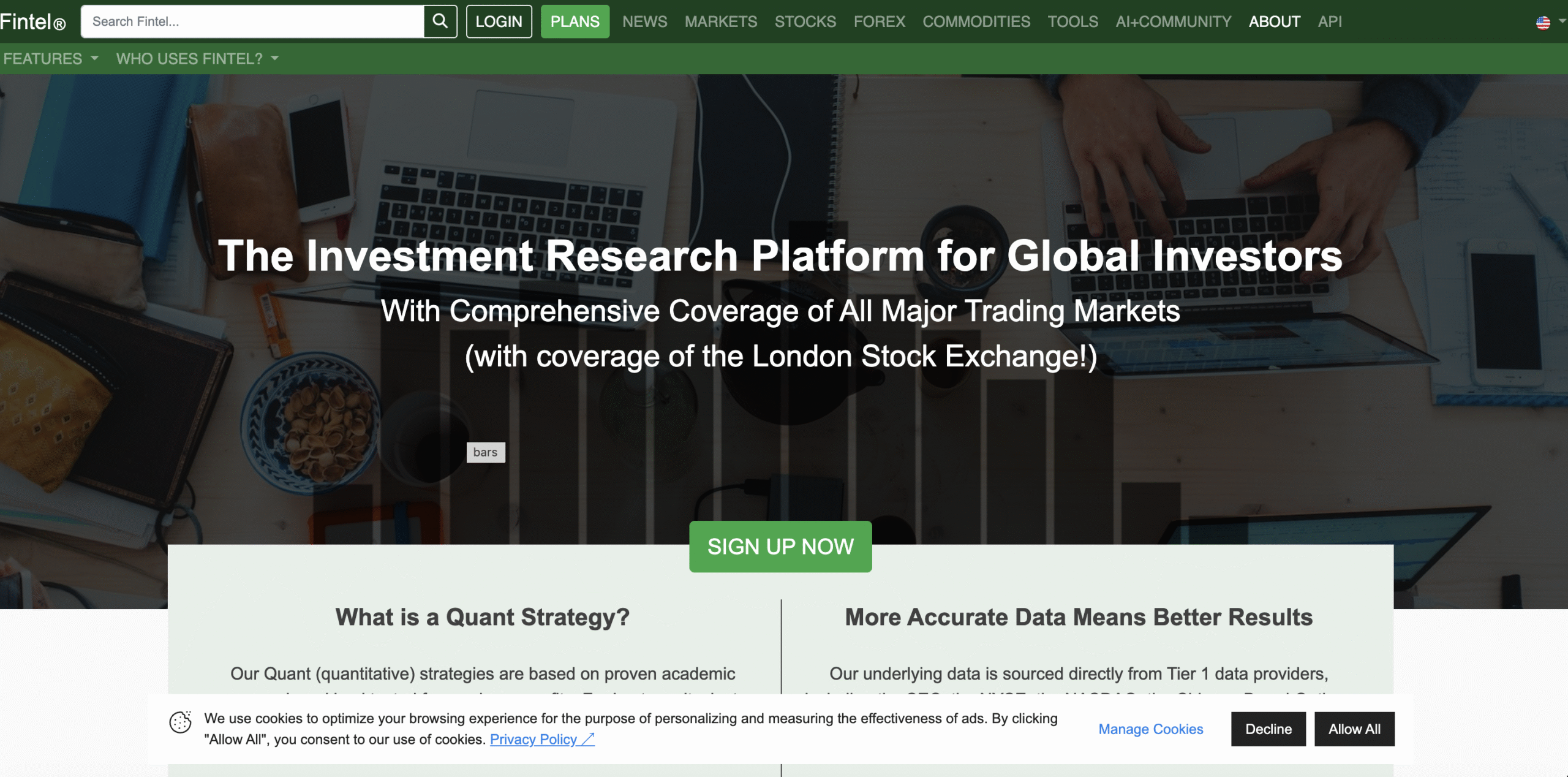
Financial-data platforms promise clarity in a market built on noise. Yet clarity is only as good as the inputs behind it. When investors rely on dashboards instead of raw filings, the quality of those upstream sources becomes the real risk surface. Fintel.io sits at the center of this modern workflow: aggregating public disclosures, normalizing them, and projecting patterns that appear authoritative.
The danger isn’t fabrication. It’s distortion.
Market signals can drift when data is late, filtered, inferred, rounded, scraped, or contextually misread. Over time, these distortions compound into behavior: entries taken too early, exits delayed too long, narratives built on incomplete scaffolding. What follows is not a verdict on Fintel.io’s intent or legitimacy. It’s a forensic map of ten toxic input sources that can subtly skew outcomes for anyone treating aggregated data as ground truth.
This is about mechanics—how signals bend.
Toxic Source 1: Filing Latency Disguised as “Real-Time”
Fintel.io draws heavily from public filings: Form 4 insider trades, 13F institutional holdings, short interest reports. These are not live feeds. They are time-gated by law. A Form 4 can be filed days after a transaction. A 13F reflects holdings from weeks ago.
Yet the interface compresses this lag into a present-tense narrative: “Insider just bought.”
In reality, the market may have already absorbed that move.
The toxic element isn’t the delay—it’s the way delay is visually erased. When latency feels like immediacy, users act on ghosts.
Behavioral effect:
Traders anchor on perceived freshness and chase moves that already matured.
Toxic Source 2: Scraped Secondary Databases
Not all datasets originate at regulators. Some are scraped from partner APIs, third-party aggregators, or mirrored repositories. Each layer introduces:
-
Formatting changes
-
Field truncation
-
Rounding errors
-
Symbol mismatches
A single misaligned CUSIP can attach the wrong institutional position to the wrong ticker. These errors are rare, but markets are sensitive to rare events when amplified by automation.
Why it matters:
A platform’s authority causes users to suspend skepticism. A small scrape error can influence thousands of identical decisions.
Toxic Source 3: Normalization That Flattens Context
To make data usable, Fintel.io normalizes filings into comparable fields. That’s helpful—until nuance disappears.
Examples:
-
Insider “purchase” vs. “option exercise”
-
Institutional “increase” vs. “portfolio rebalance”
-
Short interest “spike” vs. reporting-cycle variance
Normalization turns heterogeneous motives into uniform signals. It implies intent where none exists.
Market consequence:
Investors read meaning into mechanical adjustments, mistaking routine accounting for conviction.
Toxic Source 4: Algorithmic Highlighting Bias
Dashboards don’t just display—they prioritize. Heat maps, trending tickers, “unusual activity” tags are products of weighting logic.
What gets highlighted becomes what gets traded.
These systems favor:
-
Volume extremes
-
Percent-change outliers
-
Rapid deltas
But markets contain quiet signals too: slow accumulation, regulatory positioning, structural hedges. These rarely surface.
Result:
A bias toward spectacle. Subtlety vanishes.
Toxic Source 5: Temporal Compression Of Fintel.io
Fintel.io compresses weeks of filings into single-session narratives. A user can scroll through months of institutional moves in minutes. That speed changes perception.
Time feels flat.
An accumulation over eight quarters reads like a sudden surge. A divestment over two reporting periods feels like panic.
Cognitive impact:
Humans overweight recent-looking information. Temporal flattening amplifies recency bias even when data spans long horizons.
Diagnostic Interlude: The Signal Hygiene Checklist
Before acting on any aggregated insight, run this internal audit:
-
What is the original source of this data?
-
When was the underlying event, not the display update?
-
Is this a human decision or a mechanical artifact?
-
Could this be a normalization side-effect?
-
Would this look different in raw filing form?
Platforms simplify. Discipline reintroduces friction.
For deeper procedural frameworks on evaluating high-risk platforms, see the neutral methodology outlined in how to verify online services. It’s designed to restore first-principle thinking when interfaces feel authoritative.
Toxic Source 6: Inferred Metrics Masquerading as Facts
Some Fintel.io metrics are inferred rather than disclosed: estimated short float, dark pool ratios, sentiment composites. These are statistical constructions, not filings.
Inference is powerful. It is also probabilistic.
When estimates appear alongside hard disclosures, visual parity implies equal certainty. Users rarely distinguish.
Failure mode:
Probabilities become “truths.” Strategies built on inference inherit hidden error bars.
Toxic Source 7: Retail Behavior Feedback Loops
Platforms don’t operate in isolation. They exist inside social ecosystems—forums, Discord groups, influencer streams. A Fintel.io screenshot becomes evidence.
This creates reflexivity:
-
Data highlights a ticker
-
Communities amplify it
-
Volume increases
-
Platform registers “unusual activity”
-
Cycle repeats
The input becomes partially self-generated.
Outcome:
The tool begins measuring its own downstream effects.
Toxic Source 8: Static Interpretation of Dynamic Instruments
Options, swaps, and complex hedges appear as directional positions when flattened into tables. A hedge reads like a bet. A delta-neutral strategy reads like conviction.
Without structural visibility, derivatives become misleading narratives.
Investor error:
Misreading risk posture. Copying what appears to be exposure but is actually insulation.
Toxic Source 9: Absence Framed as Signal
What isn’t shown can be as persuasive as what is.
-
Delisted tickers vanish
-
Quiet unwindings fade
-
Failed theses disappear
Dashboards privilege continuity. Loss has no memory.
Psychological drift:
Survivorship bias. The interface teaches success by omission.
Toxic Source 10: Trust Accretion Over Time
The most dangerous input is not data—it’s familiarity.
As users spend months inside the same interface, skepticism decays. The platform becomes “the market.” Visual language replaces raw evidence.
This is not deception. It’s habituation.
Terminal risk:
When a tool becomes reality, verification stops.
A Practical Scenario
An investor spots “unusual insider buying” on a mid-cap biotech. Fintel.io shows three executives purchasing within a week. Community chatter ignites. Volume spikes.
What’s unseen:
-
Two purchases were option exercises
-
One was a pre-scheduled compensation event
-
All occurred 18 days earlier
-
The stock already moved
The user buys into narrative lag.
Nothing was false. Everything was skewed.
Comparison Framework: Raw vs. Aggregated
| Dimension | Raw Filings | Aggregated Display |
|---|---|---|
| Temporal clarity | Precise event dates | Display timestamps |
| Intent visibility | Full transaction codes | Simplified labels |
| Error surface | Manual interpretation | Automated pipelines |
| Cognitive load | High | Low |
| Bias profile | User-driven | System-shaped |
Aggregation trades effort for influence.
Anchoring Back to First Principles
Every market tool is a lens. Lenses bend.
To reduce distortion:
-
Cross-check one signal per session with a primary source
-
Treat inferred metrics as hypotheses
-
Track your own false positives
-
Reintroduce delay into decisions
For structured guidance on building safer evaluation habits, the resource on what to do after encountering platform risk provides a neutral framework for slowing response cycles and restoring verification discipline—even outside loss scenarios.
For primary-source grounding, consult the SEC’s official EDGAR system for filings and disclosure mechanics via the U.S. Securities and Exchange Commission. It remains the canonical reference layer beneath every aggregation engine.
Markets do not move because data exists. They move because humans act on representations of that data. Every layer between event and action introduces curvature.
The screen feels flat.
It isn’t.
Somewhere between a filing and a click, reality bends.
Due-Diligence Checklist
Before subscribing or relying on Fintel.io, consider the following steps:
-
Start with a Free or Low-Cost Plan: Verify login, feature access, and basic functionality.
-
Understand Subscription Terms: Be aware of renewal cycles, pricing, and refund policies.
-
Cross-Verify Data: Compare critical figures with official filings or trusted third-party sources.
-
Evaluate Customer Support Responsiveness: Test with simple inquiries to gauge response time.
-
Diversify Tools: Treat Fintel.io as one of several analytic resources, not a sole decision-maker.
Strengths Summary
| Strengths | Description |
|---|---|
| Broad Market Coverage | Insider trades, institutional holdings, short interest, dark pool trades |
| User-Friendly Interface | Clear dashboards and search tools |
| Affordable Alternative | Lower cost than professional terminals |
| Trend Identification | Useful for spotting market movement and risk signals |
| Established Platform | Operating since 2015 with consistent uptime |
Weaknesses Summary
| Weaknesses | Description |
|---|---|
| Account Access Issues | Login and activation delays reported by some users |
| Data Inconsistencies | Minor discrepancies with official filings |
| Limited Customer Support | Responses may be slow or incomplete |
| Ownership Transparency | Company details not publicly disclosed |
| Mixed User Feedback | Polarized reviews indicate variable satisfaction |
Forensic Risk Index Table
| Risk Category | Assessment | Notes |
|---|---|---|
| Operational Reliability | Medium | Platform generally works but occasional login/billing issues |
| Data Accuracy | Medium | Minor discrepancies with official filings |
| Transparency | Medium | Ownership not fully disclosed |
| Customer Support | Medium | Mixed responsiveness |
| User Feedback Consistency | Medium | Positive and negative reviews both present |
| Security & Privacy | Low | Standard SSL and secure connections |
| Financial Risk | Low | No indications of financial fraud; subscription-based service |
| Overall Forensic Risk Score | Moderate | Platform usable but caution recommended |
Practical Guidance
For investors considering Fintel.io:
-
Start Small: Begin with minimal subscription to test platform reliability.
-
Cross-Check Key Data: Always validate data against official filings or multiple sources.
-
Set Realistic Expectations: Understand the platform provides insights, not guaranteed outcomes.
-
Document Interactions: Save receipts, screenshots, or correspondences for reference.
-
Use Neutral Resources for Guidance: Platforms such as LostFundsRecovery.com can help track high-risk services and provide neutral advice for resolving account or billing issues.