
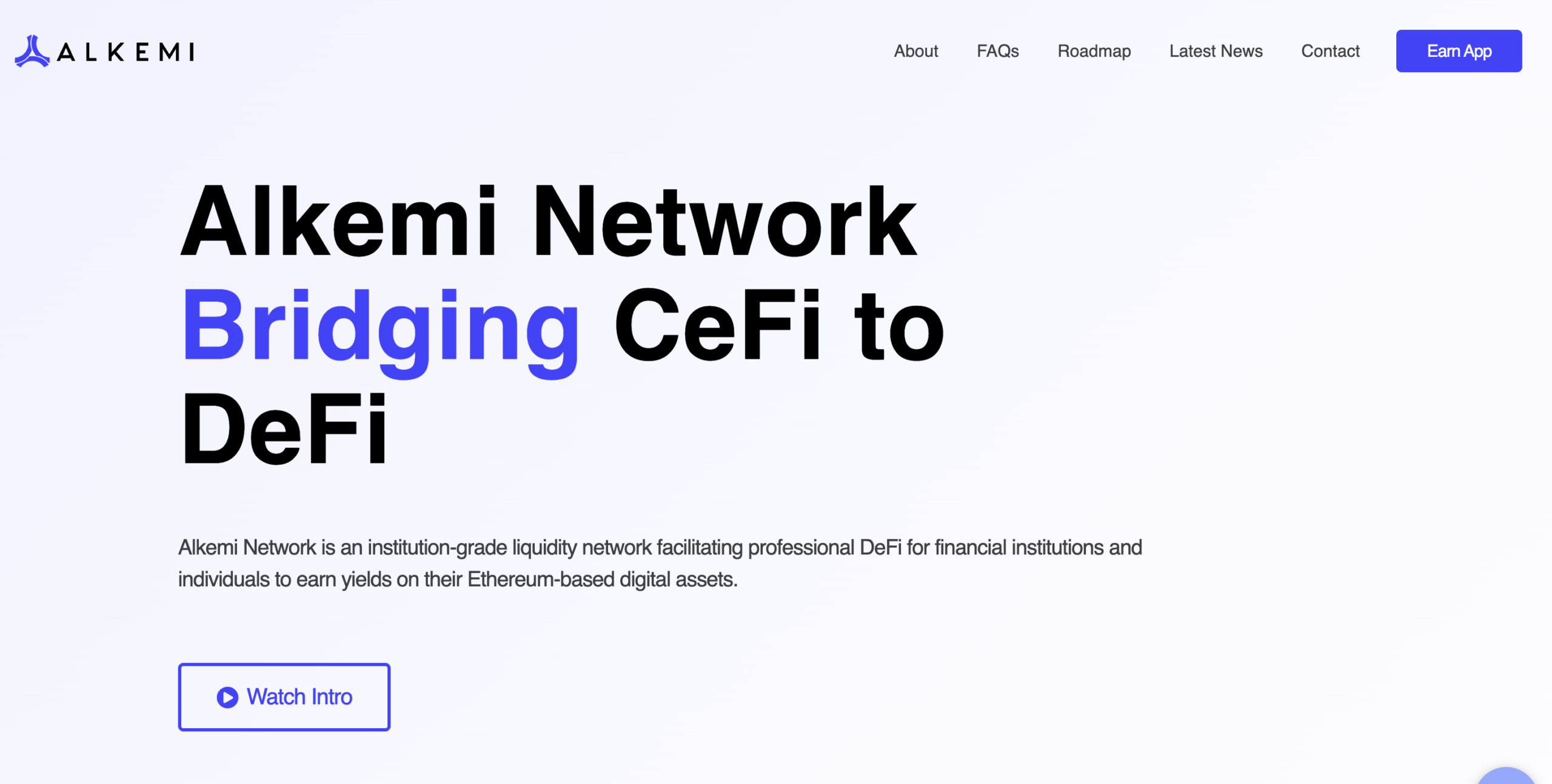
Introduction: What is/was Alkemi.Network
Alkemi.Network launched in 2018 with an ambitious vision: bridging traditional financial institutions (CeFi) with decentralized finance (DeFi) by offering an on-chain liquidity network for both “permissioned” and “permissionless” participants. Their flagship product, Alkemi Earn, allowed users to deposit assets like ETH, WBTC, USDC, and DAI to earn interest, or borrow against collateral — operating similarly to protocols like Compound or Aave.
Alkemi.Network positioned itself as “the first decentralized liquidity network to facilitate both KYC-permissioned and permissionless pools governed by a single network utility token (ALK).” The idea was that institutional players — exchanges, custodians, large allocators — could access compliant, KYC/AML-approved “Verified” pools, while everyday users could tap into “Open” pools without KYC.
The project raised around $4.6 million in a seed round and seeded the network with initial liquidity. On paper, Alkemi.Network promised to be a bridge, merging the security and compliance requirements of traditional finance with the openness and flexibility of DeFi.
Where Alkemi.Network Went Wrong
Despite the ambitious narrative, Alkemi.Network quickly ran into serious operational and trust issues, with many users reporting difficulties accessing funds and withdrawals. Multiple themes emerged across community feedback and reviews.
Users Report Funds Are Locked
A major allegation from users is that deposits became inaccessible, leaving many unable to withdraw their funds. This sparked widespread concern and suspicion that the platform was mismanaged or worse.
Disappearance from Major Integrations
Alkemi.Network was initially integrated with popular wallet interfaces, which made access and usability straightforward. The sudden removal from these integrations created significant access issues for users and amplified the perception that the platform was unreliable or potentially fraudulent.
Lack of Transparency
Alkemi.Network had limited public user feedback and virtually no visible track record of positive withdrawals. Users frequently cited unresponsive support and the lack of official communication regarding issues as major concerns.
Risks Acknowledged by Alkemi.Network
Even in official documentation, Alkemi.Network warned users about inherent risks, including smart contract vulnerabilities, oracle failures, and financial/credit risks. They also acknowledged that early governance was centralized, creating further exposure to operational or administrative errors.
What Alkemi.Network Promised
To evaluate its alleged scam status, it helps to understand what the platform claimed to offer:
-
Dual-Pool Model: Verified pools for institutional participants and open pools for regular users.
-
Non-Custodial, On-Chain Smart Contracts: Users were promised custody of their funds and the ability to withdraw at any time.
-
Institution-Grade Features: Multi-signature wallets, risk controls, and reporting were marketed as suitable for exchanges, custodians, and large allocators.
-
Native Governance Token (ALK): To manage protocol governance and align stakeholder interests.
-
Security Measures: The platform claimed smart contracts were audited and that standard security measures were implemented to reduce risks.
Despite these promises, many users experienced difficulties with withdrawals, lost access to their funds, and reported unresponsive support.
Failed or Scam?
The debate over whether Alkemi.Network was a scam or merely a failed project is nuanced.
Poorly Managed Project
-
The platform had legitimate infrastructure and funding.
-
Combining DeFi and compliance for institutions was a complex technical challenge.
-
Risks inherent in smart contracts, governance, and oracle systems could easily lead to failures without malicious intent.
Potential Scam Indicators
-
User reports of inaccessible funds and unresponsive support.
-
Sudden removal from wallet integrations, leaving users unable to access deposits.
-
Lack of verifiable positive user outcomes or transparent communication.
Regardless of intent, the end result was clear: many users lost access to funds, creating a real-world impact similar to that of a scam.
Lessons from Alkemi.Network
Alkemi.Network’s story offers several important lessons for crypto and DeFi users:
-
Check Verifiable Withdrawals: Marketing may look promising, but what matters is whether users can actually access their funds.
-
Be Cautious of External Dependencies: Platforms relying on third-party wallets or integrations can leave users stranded if those integrations are removed.
-
Understand DeFi Risks: Even audited smart contracts carry the potential for bugs, oracle failures, and operational risks.
-
Avoid Overly Ambitious Hybrids: Projects promising to merge CeFi compliance with DeFi yield and governance often face execution challenges.
-
Diversify Assets: Never concentrate all holdings in a single high-risk platform.
-
Demand Transparency: Active communication, community engagement, and a track record of successful withdrawals are key indicators of reliability.
Steps to Take After Being Scammed
- Stop All Communication: Once you realize you’ve been scammed, stop any communication with the fraudulent platform. Scammers may try to manipulate you into making further deposits by claiming there’s a way to recover your initial investment.
- Document Everything: Collect all relevant evidence of your transactions and communications with the platform. This includes screenshots of conversations, transaction receipts, and any emails or documents provided by the scam broker.
- Report the Scam: It is important to report the scam to the authorities and relevant online platforms. Websites like LOSTFUNDSRECOVERY.COM provide a detailed process for reporting cryptocurrency scams and ensuring they are documented for investigation.
- Seek Professional Help: Crypto scams are complex and often require professional assistance to recover lost funds. This is where services like LOSTFUNDSRECOVERY.COM come into play.
How LostFundsRecovery.com Can Help You Recover from the Scam
If you have been a victim of the Alkemi.Network scam, all hope is not lost. Recovery firms like LostFundsRecovery.com specialize in helping scam victims retrieve their lost funds. Here’s how LostFundsRecovery.com can assist:
1. Investigating the Fraud
LostFundsRecovery.com conducts thorough investigations into scam brokers. By analyzing transactions, tracking digital footprints, and gathering evidence, they build a strong case against fraudulent platforms like Alkemi.Network.
2. Chargeback Assistance
Many victims who deposit funds via credit or debit cards may be eligible for chargebacks. LostFundsRecovery.com guides clients through the chargeback process by providing necessary documentation and liaising with banks and financial institutions.
3. Cryptocurrency Transaction Tracing
If you deposited funds in cryptocurrency, recovery can be more challenging. However, LostFundsRecovery.com uses blockchain analysis tools to track and trace stolen digital assets. Identifying wallet addresses and transaction histories can provide crucial leads in fund recovery.
4. Legal Support
LostFundsRecovery.com collaborates with legal experts to take action against scam brokers. Depending on the jurisdiction, they can help file complaints with financial regulators, law enforcement, and cybersecurity agencies.
5. Prevention and Education
In addition to fund recovery, LostFundsRecovery.com educates victims on avoiding future scams. By raising awareness about fraudulent schemes, they help investors make informed decisions and safeguard their assets.
Recommendations for Investors Considering Alkemi.Network
If you are thinking about trading through Alkemi.Network, or you are an existing user, here are practical suggestions to improve your experience and protect your investments:
-
Verify the Website: Always type Alkemi.Network directly into your browser rather than clicking on external links.
-
Use Strong Security Measures: Implement strong passwords and enable two-factor authentication to safeguard your account.
-
Keep Records of Transactions: Document all trades, withdrawals, and account changes to address any potential issues efficiently.
-
Start Small: If you are new to Alkemi.Network, consider starting with small trades to test the platform before committing larger sums.
-
Stay Informed: Monitor account activity regularly and stay updated on any platform announcements or changes to services.
-
Compare Alternatives: Consider whether other brokers offer lower fees, better support, or smoother platforms depending on your trading style.
These steps can help mitigate risks while using Alkemi.Network and ensure a smoother investment experience.
Report Alkemi.Network Scam and Recover Your Funds
If you have lost money to Alkemi.Network, it’s important to take action immediately. Report the scam to LOSTFUNDSRECOBERY.COM, a trusted platform that assists victims in recovering their stolen funds. The sooner you act, the better your chances of reclaiming your money and holding these fraudsters accountable.
Scam brokers like Alkemi.Network continue to target unsuspecting investors. Stay informed, avoid unregulated platforms, and report scams to protect yourself and others from financial fraud. Read More reviews at Scams2Avoid
Stay smart. Stay safe.
Conclusion
Alkemi.Network began as a promising attempt to bridge traditional finance with decentralized lending. Despite raising funding, completing audits, and promising compliance-ready solutions, it failed to deliver on core user expectations. Many users report locked funds, unresponsive support, and inaccessible integrations.
Whether it was a scam or simply a failed project remains debated, but the consequences for users were real: loss of access, loss of trust, and financial uncertainty. Alkemi.Network serves as a cautionary tale in the crypto space, highlighting the importance of transparency, user trust, and realistic execution in DeFi ventures.
In the volatile world of DeFi and crypto, Alkemi.Network underscores a critical lesson: hype and marketing cannot replace a track record of secure, accessible, and transparent operations.