Editorial Context
Over the past few years, the lure of making money online—especially via cryptocurrency, multi-level marketing (MLM), or “passive income” platforms—has grown significantly. In many cases, the promises are enormous, the setup appears slick, and early testimonials may look tempting. However, some of these platforms turn out to be little more than sophisticated scams.
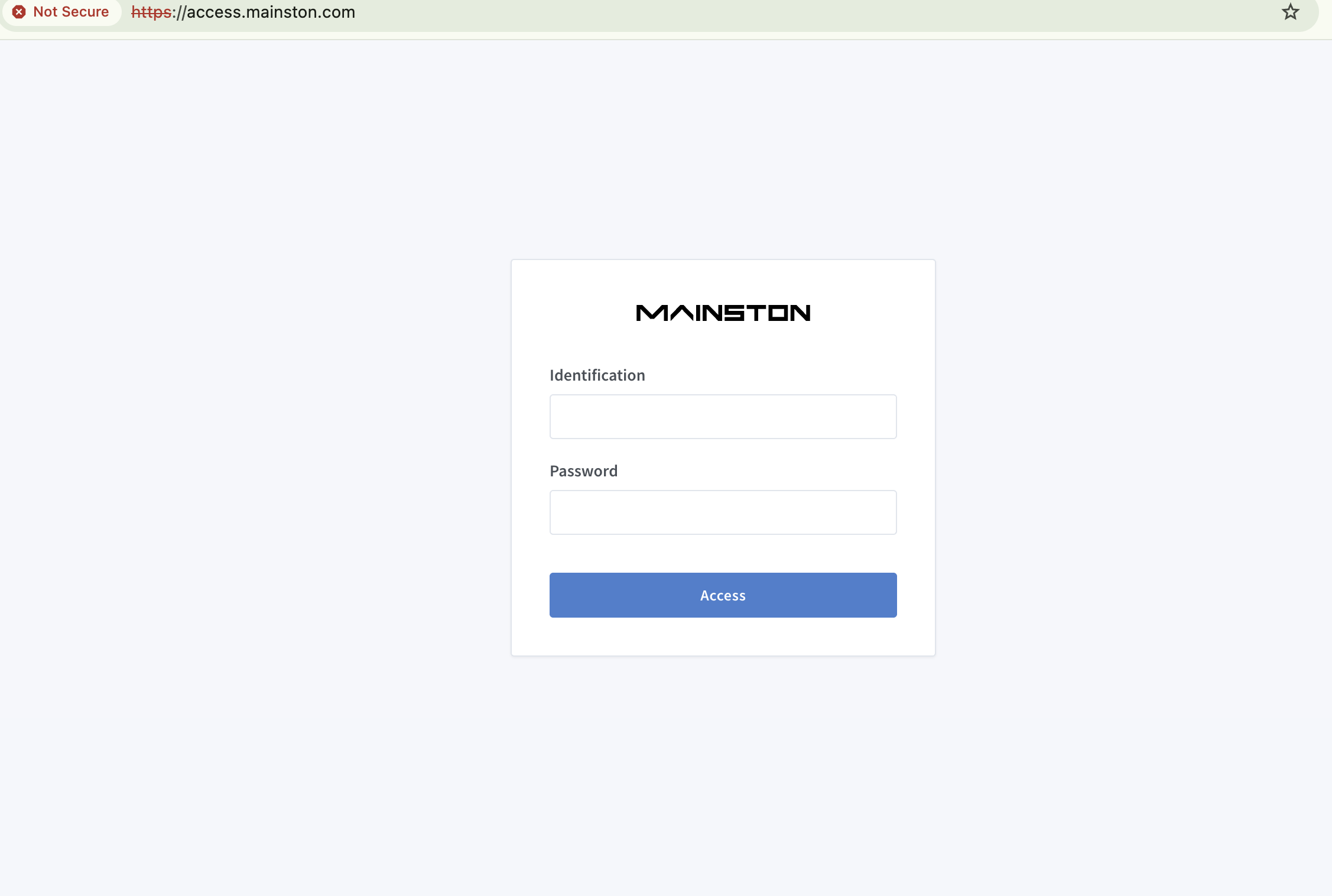
One such platform is Mainston (via the website Mainston.com). While it presents itself as a legitimate opportunity to earn income, multiple indicators raise serious doubts about its legitimacy. This review explores those doubts in depth: the origins of the platform, how it is marketed, what evidence suggests it may be a scam, what users have reported, regulatory and transparency issues, and why caution is essential.
Platforms that blend cryptocurrency language, income systems, and community-driven participation often present themselves as modern financial ecosystems. They emphasize access, innovation, and independence. The framing is familiar: technology removes friction, decentralization removes gatekeepers, and participation becomes opportunity.
Mainston.com fits squarely into that narrative.
This analysis does not begin with accusations, nor does it lean on labels. Instead, it examines the internal mechanics of how the platform is structured, how value is described, how participation is incentivized, and how risk accumulates quietly over time.
What follows is a layered examination—each layer independent, but compounding when combined.
Layer One: Structural Asymmetry Between Participants and Operators
At the surface, Mainston.com presents itself as an open system. Users can join, participate, upgrade, and engage with various features tied to income, tokens, or internal rewards.
But structurally, the platform is asymmetric.
Control is concentrated at the top:
-
Rules can be modified without user consent
-
Terms are enforced unilaterally
-
Platform continuity depends entirely on operator decisions
Participants, by contrast, operate within fixed constraints. Once capital or effort is committed, there is no reciprocal authority.
This imbalance matters because risk is not shared proportionally. Operators can pivot, pause, or dissolve infrastructure. Participants absorb the consequences.
Asymmetry alone does not imply misconduct—but it defines who carries exposure when conditions change.
Layer Two: Revenue Logic That Favors Circulation Over Creation
A healthy financial model produces value externally, then distributes it internally.
Mainston.com’s model emphasizes internal circulation instead.
Observed patterns include:
-
Incentives linked to participation tiers
-
Rewards associated with onboarding others
-
Benefits tied to internal token usage rather than external demand
The question becomes: Where does value originate?
When most rewards are derived from new activity within the same system, sustainability becomes dependent on constant growth. Once inflow slows, pressure propagates downward.
This is not an abstract concern. Systems designed around circulation tend to degrade quietly before they visibly fail.
Layer Three: Token Dependency Without Market Independence
Mainston.com references or integrates a proprietary token as part of its ecosystem logic. Tokens often signal innovation—but only when paired with independent utility.
In this case, observable issues include:
-
Limited exchange presence
-
Minimal external trading activity
-
Utility largely restricted to platform mechanics
A token that cannot function meaningfully outside its own environment behaves less like an asset and more like an accounting unit.
The risk here is subtle. Users may equate token ownership with value, without realizing that liquidity and demand are externally determined, not internally declared.
For reference on how regulators evaluate crypto asset risks and disclosures, see guidance from the UK Financial Conduct Authority
Layer Four: Communication Density Drops After Commitment
During onboarding, platforms often communicate frequently. Language is explanatory. Support appears responsive. Momentum is visible.
Post-commitment, that density often declines.
With Mainston.com, user-facing communication appears to be:
-
Event-driven rather than continuous
-
Selective in scope
-
Focused on motivation rather than metrics
This creates an information gradient: the more invested a participant becomes, the less granular visibility they receive.
Silence here is not necessarily procedural failure. But information gaps amplify uncertainty, especially in systems where users lack exit flexibility.
Layer Five: Legal and Corporate Traceability Weakens Over Time
Corporate presence is not static. Entities register, dissolve, relocate, or rebrand.
In Mainston.com’s case, historical traces show:
-
Shifts in jurisdiction
-
Corporate entities that no longer appear active
-
Limited public documentation tying current operations to accountable structures
When traceability erodes, so does recourse.
This matters not because every dissolved entity implies wrongdoing—but because resolution pathways narrow when disputes arise. Accountability depends on continuity.
If you are unfamiliar with how to evaluate operational legitimacy, the guide on how to verify platforms before participation provides a structured checklist.
Layer Six: Psychological Reinforcement Replaces Financial Clarity
Mainston.com’s messaging leans heavily on progress signals:
-
Levels
-
Status markers
-
Advancement milestones
These mechanisms are powerful. They trigger completion bias and reinforce continued participation even when objective performance data is thin.
This is not accidental. Behavioral reinforcement is cheaper than financial transparency.
The risk is not emotional—it’s analytical. When motivation replaces measurement, participants may continue allocating time or funds without clear reference points.
Layer Seven: Exit Ambiguity Is Treated as a Feature, Not a Bug
Perhaps the most consequential layer is exit design.
In traditional investments, exit paths are defined—even if uncertain. In many platform-based systems, exit is intentionally ambiguous.
With Mainston.com:
-
Withdrawal conditions are conditional
-
Token conversion pathways are unclear
-
Timelines are not externally verifiable
This creates a one-way friction dynamic: entry is easy, exit is abstract.
Exit ambiguity does not trigger immediate concern—but over time, it transforms participation into obligation.
A Comparative Snapshot: Mainston.com Platform vs. Market Norms
| Dimension | Market Standard | Mainston Model |
|---|---|---|
| Value Source | External revenue | Internal circulation |
| Asset Liquidity | Market-driven | Platform-dependent |
| Governance | Regulated entities | Operator-controlled |
| Transparency | Periodic disclosures | Selective communication |
| Exit Clarity | Defined mechanisms | Conditional pathways |
This comparison is not a verdict. It is context.
Where Risk Accumulates Quietly on Mainston.com
Individually, each layer may seem manageable.
Together, they compound.
-
Asymmetry limits leverage
-
Circulation stresses sustainability
-
Token dependence restricts liquidity
-
Communication gaps widen uncertainty
-
Weak traceability narrows recourse
-
Psychological cues override analysis
-
Exit ambiguity delays realization
Risk here is not explosive. It is incremental.
For readers exploring protective frameworks around digital participation, the resource on asset protection fundamentals offers broader context without platform-specific framing.
A Note on Platform Evaluation
This article does not instruct action. It outlines structure.
If participation decisions are already made, documentation matters. Records matter. Timelines matter.
If evaluation is ongoing, distance is useful. So is comparison.
Not all platforms fail loudly. Many simply fade operationally, leaving participants to reconcile expectations with architecture.
Closing Frame (Intentional Stop)
Mainston.com does not need to collapse to be costly.
It only needs to continue operating in a way that transfers uncertainty downward.
Risk is not always announced.
Sometimes it is engineered—quietly, layer by layer.
And once those layers align, outcomes feel less like surprises and more like inevitabilities.