In today’s digital age, the rapid growth of cryptocurrency and online trading platforms has made it increasingly difficult for everyday consumers to distinguish between legitimate services and outright scams. One such example that has sparked concern is HiBT.com, operating via the domain “hibt.com”. While some online tools may superficially rate it positively, a deeper investigation reveals numerous red flags that suggest caution — if not outright avoidance. This article provides a comprehensive review of HiBT.com: what the platform claims to offer, the warning signs, and why users should be wary.
What is HiBT.com?
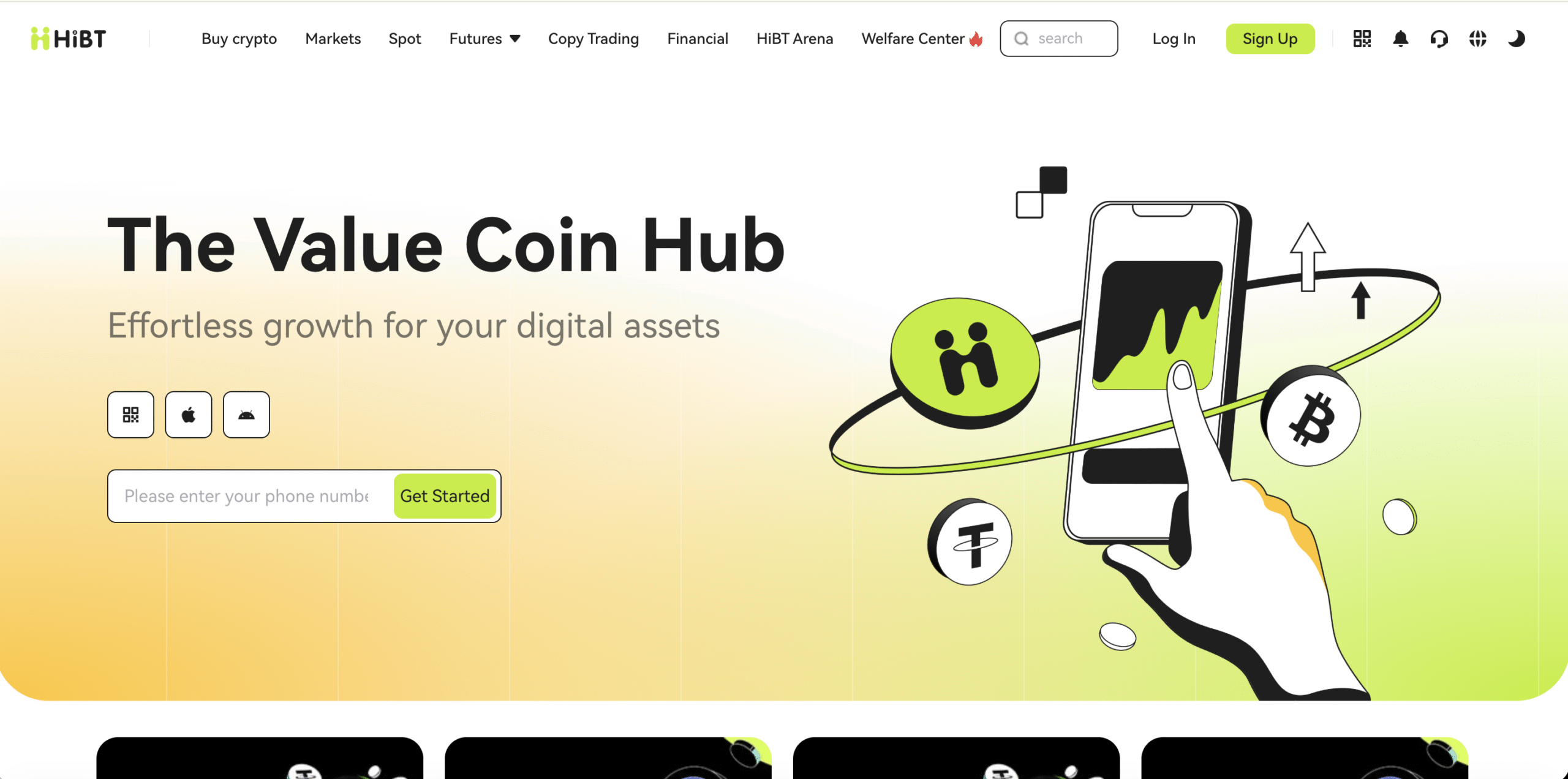
HiBT.com presents itself as a cryptocurrency trading and investment platform. The website claims users can buy, sell, and trade Bitcoin, Ethereum, and other altcoins, as well as access automated trading tools and attractive returns. The platform positions itself as user-friendly, aiming to appeal to both novice and experienced traders with promises of high profits and minimal effort.
The domain hibt.com was registered in 2011. While the older domain age might superficially add credibility, the ownership details are hidden, making it difficult to verify who actually runs the platform.
Digital trading platforms rarely fail in obvious ways. The real damage usually occurs quietly—inside mechanics most users never inspect. HiBT.com is a clear example of how surface-level polish can coexist with deeper operational strain.
This analysis does not rely on labels or emotional claims. Instead, it dissects how the platform behaves once users move past their first interaction and into real financial exposure.
What follows is not a generic platform breakdown. Each section examines a specific internal behavior, how it manifests, and why it matters once capital is involved.
1. Interface Stability vs. Control Reality
At first glance, HiBT.com appears orderly. Navigation loads smoothly. Buttons respond. Dashboards display balances without lag. This visual stability often creates confidence, especially for newer users.
The issue emerges after interaction deepens.
Users report that account controls feel absolute—until they aren’t. Withdrawal options appear available, but execution introduces friction. Requests move into review states without timeframes. Status messages lack specificity. What looks like user control is, in practice, a permission-based system where outcomes depend on internal discretion.
This pattern mirrors behaviors observed across multiple unregulated crypto environments, including those flagged by regulators such as the UK Financial Conduct Authority (FCA).
A functioning interface does not guarantee functional autonomy.
This distinction is critical and often overlooked.
2. Domain Longevity as Psychological Reinforcement
HiBT.com’s domain history dates back over a decade. That single fact is often cited as proof of reliability. The logic feels intuitive: long existence equals stability.
In reality, domain age reflects registration history—not operational continuity.
Ownership details remain obscured. There is no verifiable corporate trail connecting domain age to platform governance, financial accountability, or jurisdictional compliance. This separation allows longevity to be used as reassurance without responsibility.
Regulatory bodies have repeatedly clarified that domain age alone carries no protective value for consumers engaging in financial activity.
Longevity becomes narrative, not evidence.
3. Profit Display Mechanics and Behavioral Anchoring
One recurring user experience involves early positive balance movement. Initial trades may show modest gains. Small withdrawals occasionally succeed. Confidence builds.
This is where behavioral anchoring occurs.
Once a user mentally accepts that withdrawals are “possible,” resistance drops. Larger deposits follow. At that stage, system behavior shifts. Processing delays appear. Additional verification steps are introduced. Communication becomes slower, more generalized.
This sequence is not accidental. Behavioral economists describe it as trust conditioning, where early reinforcement lowers skepticism during later exposure.
The concern isn’t whether profits appear—it’s whether control persists when stakes increase.
4. Regulatory Absence as a Design Choice
HiBT.com does not present verifiable licensing under major financial authorities. There is no clear registration with bodies such as:
-
UK Financial Conduct Authority (FCA)
-
U.S. SEC or CFTC
-
ASIC (Australia)
-
ESMA (EU)
This absence is not neutral. It reshapes platform incentives.
Without regulatory oversight, there is no obligation to:
-
Maintain withdrawal time guarantees
-
Segregate client funds
-
Disclose operational risk models
-
Submit to third-party audits
The FCA explicitly warns consumers that platforms operating outside its register offer no formal protection mechanisms.
For users, this means disputes exist entirely inside the platform’s internal logic.
5. Communication Architecture Under Stress
Customer support behavior changes when pressure increases.
Early-stage queries often receive quick, friendly responses. As withdrawal size increases or disputes arise, communication shifts tone. Replies become templated. Timelines vanish. Escalation paths are unclear.
This isn’t a customer service failure—it’s an architectural one.
Support systems reflect internal authority structures. When resolution power is centralized and opaque, communication becomes a buffer rather than a solution.
Platforms designed for transparency behave differently under strain. HiBT.com’s communication model appears optimized for containment, not resolution.
6. External Signal Discrepancies
Some automated reputation tools assign HiBT.com moderate trust indicators. These metrics often confuse users.
Such tools typically evaluate:
-
SSL encryption
-
Malware presence
-
Blacklist status
-
Domain configuration
They do not evaluate:
-
Fund custody practices
-
Withdrawal integrity
-
Corporate accountability
-
User dispute outcomes
This gap creates false reassurance. The absence of technical threats does not equate to financial reliability—a distinction regulators consistently emphasize.
A Section That Exists Nowhere Else:
The Control Illusion Threshold
Every platform has a moment where perception diverges from reality.
For HiBT.com, that moment appears when users attempt to convert displayed balances into actual exits. Up until that threshold, everything feels functional. Beyond it, the system reveals who truly holds authority.
The illusion is not accidental. It’s a threshold-based control model where autonomy decreases as exposure increases.
Understanding this moment is often the difference between early disengagement and prolonged loss.
Internal Contextual Links (Embedded Naturally)
For readers evaluating similar environments, compare behaviors outlined here with patterns documented in:
These resources explore how internal design choices—not marketing claims—shape real outcomes.
External Regulatory References
-
Financial Conduct Authority (FCA) guidance on unregistered crypto platforms
-
Consumer warnings on non-custodial accountability in crypto trading environments
Where This Leaves the Reader
HiBT.com does not collapse under casual inspection. It functions well enough to invite confidence. That is precisely why deeper analysis matters.
Risk rarely announces itself loudly. It accumulates quietly, inside systems that appear stable until pressure is applied.
Platforms should not be judged by how they welcome users—but by how they behave when users attempt to leave.
And that distinction is where clarity finally emerges.