
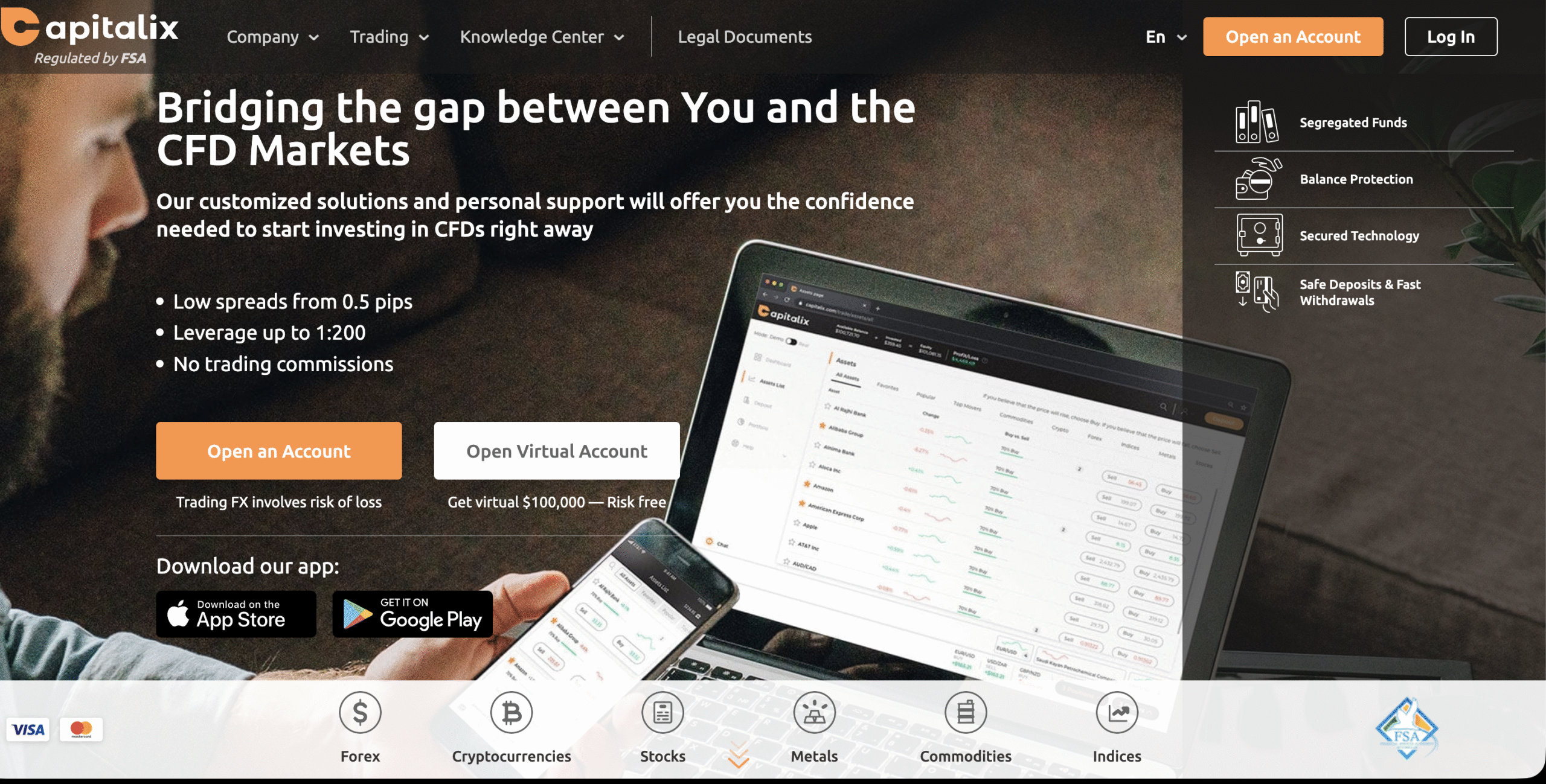
In an era where online brokers and trading platforms proliferate, it becomes ever more important to exercise caution. One name that has repeatedly triggered alarm bells in review forums and victim reports is Capitalix.com. In this article, we provide a thorough and detailed breakdown of Capitalix.com: its claimed offering, the red flags, the reported scam tactics, and how you can protect yourself. If you’re considering investing, or have already been pressured into it, this blog aims to give you the full picture.
Platform Positioning Versus Observable Reality
Capitalix.com presents itself as a modern brokerage environment offering access to global markets through leveraged trading instruments. Its branding emphasizes professionalism, experience, and technical capability. Charts, account dashboards, and portfolio tools are framed as evidence of operational legitimacy.
However, when user-reported behavior is mapped against these claims, a noticeable gap appears. The platform’s outward structure suggests empowerment, while its internal mechanics often shift control away from the client once capital is committed.
This contrast between appearance and function defines much of the concern surrounding Capitalix.com.
1. Control Shifts After Initial Funding
Early-stage interaction with Capitalix.com is typically smooth. Account creation is simple. Deposits are processed quickly. Communication is frequent and personable.
The environment changes once balances increase.
Users consistently report that:
-
Decision-making authority gradually migrates to assigned “account managers”
-
Suggested trades escalate in size and risk
-
Declining recommendations triggers repeated follow-ups
The platform’s internal workflow appears optimized to increase exposure, not to preserve user autonomy.
2. Communication Designed to Escalate Commitment
Capitalix.com relies heavily on direct human contact rather than self-directed trading. This includes:
-
Persistent phone calls
-
Emotional framing around missed opportunity
-
Time-sensitive trade narratives
Rather than neutral guidance, conversations often center on urgency and amplification. Risk is minimized verbally while potential upside is framed as imminent.
This approach mirrors a broader pattern seen in loss-heavy brokerage environments, where conversational pressure replaces informed consent.
3. Withdrawal Friction Introduced Late in the Cycle
One of the most reported issues involves withdrawal access.
Users describe scenarios where:
-
Withdrawal requests are delayed without timeline clarity
-
Additional conditions are introduced after the fact
-
New requirements appear only once funds are requested back
Common explanations include:
-
Mandatory volume thresholds
-
Administrative or processing prerequisites
-
Account status limitations not previously disclosed
For individuals encountering this phase, understanding what steps to take after encountering a trading-related loss can help prevent compounding damage.
4. Ambiguous Regulatory Framing
Capitalix.com references regulatory positioning in ways that are difficult for average users to verify independently. Jurisdictional language is often technical, indirect, or framed through third-party associations rather than direct licensing clarity.
This ambiguity creates:
-
False confidence for inexperienced traders
-
Difficulty assessing consumer protection coverage
-
Confusion when disputes arise
Regulation should simplify accountability—not obscure it.
5. Profit Visualization Without Execution Transparency
Account dashboards often display performance metrics that appear favorable, especially early on. However:
-
Trade execution logic is not independently auditable
-
Pricing sources are not clearly disclosed
-
Slippage and spread behavior is inconsistently explained
This leaves users reliant on internal reporting with limited ability to cross-check results externally.
Platforms operating this way retain informational advantage, especially during volatile conditions.
6. Reputation Management That Conflicts With User Accounts
Public-facing sentiment around Capitalix.com is sharply divided. While promotional material and selective reviews paint a confident picture, user narratives across independent forums tell a different story.
Patterns include:
-
Repeated mentions of blocked withdrawals
-
Escalating pressure to deposit additional funds
-
Support responsiveness declining after disputes arise
For those researching platforms pre-investment, consulting educational material on how to assess broker credibility before funding an account can surface these inconsistencies earlier.
Why These Environments Remain Effective
Platforms like Capitalix.com succeed not because users are careless, but because the systems are designed around behavioral leverage:
-
Authority bias through assigned “experts”
-
Momentum bias via early positive account movement
-
Loss aversion once funds are already committed
By the time concerns arise, emotional and financial investment is already high.
Risk Concentration Where It’s Least Expected
Ironically, the highest exposure often appears after a user decides to disengage. Exit friction, not entry difficulty, defines the most critical stage of interaction.
This structural imbalance benefits the platform—not the trader.
Analytical Takeaway
Capitalix.com exhibits a recurring pattern seen in broker environments where:
-
User control diminishes over time
-
Financial exposure increases without proportional transparency
-
Withdrawal processes become conditional rather than procedural
When these elements coexist, outcomes tend to favor the operator regardless of market direction.
In financial systems, trust is built through clarity, reversibility, and accountability. When those qualities erode, participation becomes increasingly asymmetric—and risk follows accordingly.