
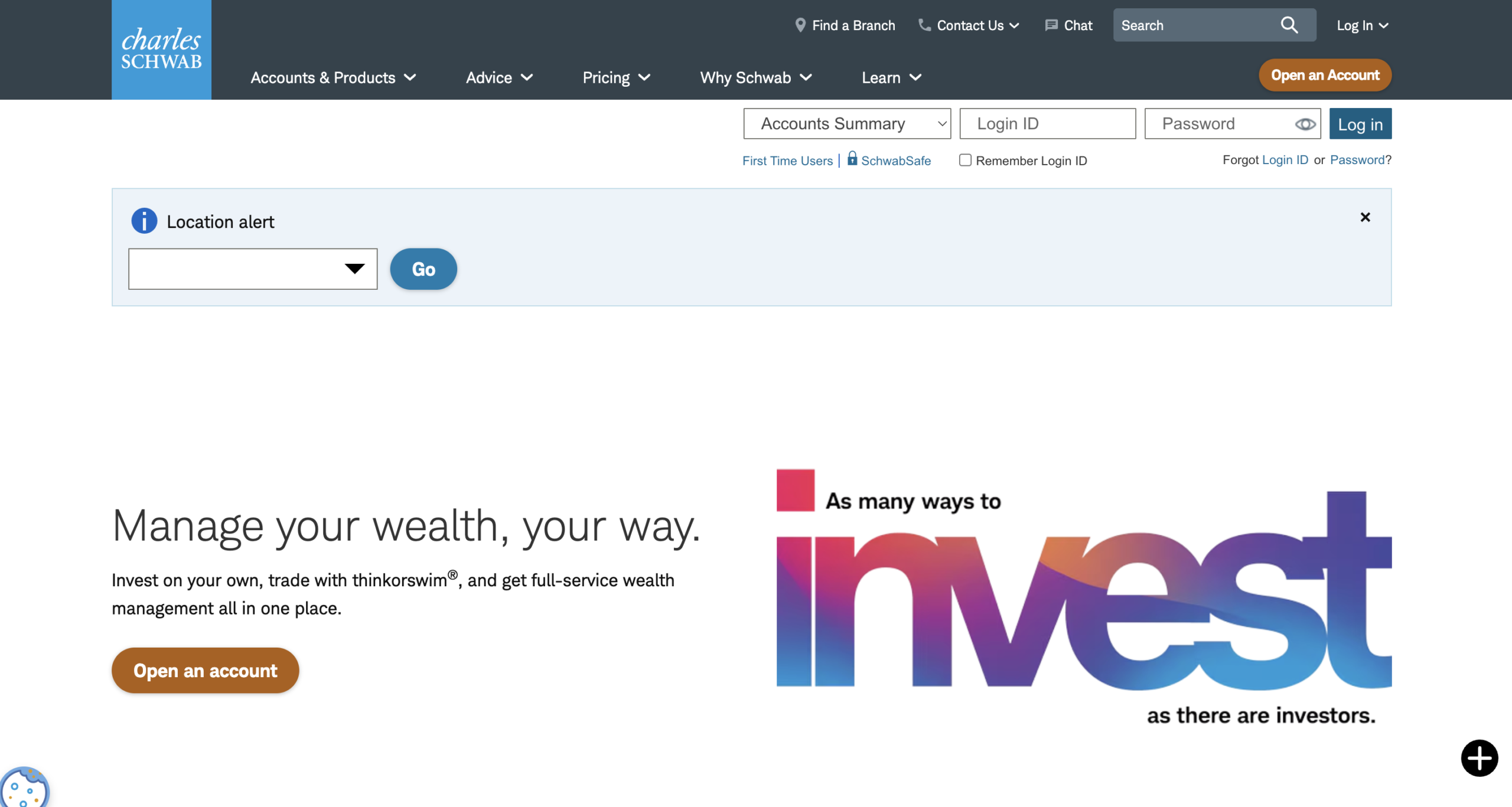
Important: Charles Schwab’s official website, schwab.com, is legitimate. However, scammers frequently impersonate Schwab to steal money, personal information, and login credentials. Understanding how these scams work, the warning signs, and the steps you can take to protect yourself is crucial for anyone who invests or manages money online.
Why Trusted Brands Are Targeted by Scammers
Scammers rely on two basic truths: people trust well-known brands, and many assume that a company they already use is safe. Fraudsters impersonate trusted companies like Charles Schwab to create a false sense of urgency or legitimacy. Messages claiming “account problems,” “unauthorized transfers,” or “security alerts” look real because the Schwab brand is real. Many victims respond quickly without realizing that the request is fraudulent, making them vulnerable to identity theft and financial loss.
Common Schwab-Related Scams
Fraudsters use multiple channels to impersonate Schwab. These are the most common:
-
Phishing Emails: Fake emails that replicate Schwab’s branding often include urgent requests to log in to “verify your account.” Clicking the link takes you to a cloned login page that captures your username, password, and sometimes your two-factor authentication code.
-
Smishing (SMS Phishing): Text messages may claim that a suspicious transfer or disbursement requires immediate action. Responding or clicking the included link can give attackers access to your account or install malware on your device.
-
Vishing (Phone Scams): Scammers call while pretending to be Schwab employees, often claiming that your account is at risk. They may ask you to reveal PINs, authentication codes, or even authorize transfers.
-
Fake Pop-Ups and Overlay Pages: Fraudsters create pop-ups or website overlays that ask users to “reverify” their credentials. These appear on compromised websites or through malicious ads and are designed to harvest sensitive data.
-
Social Engineering Attacks: Attackers sometimes combine these methods to take over accounts. They can trick users into providing codes sent via SMS or authenticator apps, bypassing multi-factor authentication.
Scammers frequently use lookalike domains, typosquatting, and spoofed phone numbers to increase the credibility of their attacks.
How Real Harms Occur
Scammers’ actions often result in two types of financial harm:
-
Immediate Transfers or Cash-Outs: Once attackers have access to an account, they may transfer funds to other bank accounts, wire money overseas, convert assets to cryptocurrency, or buy valuable items for immediate pickup. Rapid transfers make it difficult to recover funds.
-
Credential Theft and MFA Interception: Attackers steal login credentials and trick users into providing authentication codes. With this information, they can bypass multi-factor authentication and perform unauthorized transactions.
Even institutions with strong security measures cannot always prevent these attacks if a victim is manipulated into sharing codes or credentials.
Key Warning Signs of Schwab-Related Scams
Being able to identify suspicious communications is the most effective way to avoid becoming a victim. Watch for:
-
Urgency and Secrecy: Messages insisting you act immediately or “do not tell anyone” are classic warning signs. Legitimate Schwab communications rarely demand instant action without prior context.
-
Email or Domain Oddities: Official Schwab emails come from schwab.com subdomains. Domains with extra letters, missing letters, or unusual TLDs are fake. Don’t rely on display names; they can be spoofed.
-
Suspicious Links: Hover over links to see the actual URL. If it isn’t an official Schwab domain, don’t click. Scammers often create lookalike login pages.
-
Unexpected Requests for Codes or Passwords: Schwab will never ask you to send full passwords, security PINs, or one-time authentication codes via email or text.
-
Phone Calls Asking for Remote Access: Schwab staff will not request that you install software or give remote access to fix your account.
If anything seems off, pause, and verify using official channels.
Steps to Take if You Suspect a Scam
-
Act Quickly: Change your Schwab password immediately from a device you trust and revoke active sessions if possible.
-
Contact Schwab Directly: Call the official fraud team using the phone number on schwab.com, not the number provided in suspicious messages.
-
Secure Your Accounts: Enable stronger authentication methods such as security keys or authenticator apps.
-
Document Everything: Save emails, text messages, screenshots, and call logs. These records are essential for investigations and potential law enforcement action.
-
Report the Incident: File reports with Schwab, your local authorities, and consumer protection agencies.
Time is critical, especially if unauthorized transfers have already been initiated.
Recovering Lost Funds
While recovery can be challenging, certain actions improve your chances:
-
Contact Schwab Immediately: Their fraud team can freeze accounts, investigate suspicious activity, and help recover funds if possible.
-
Notify Your Bank or Payment Providers: For ACH, wire, or debit transactions, the originating bank may recall transfers.
-
Alert Receiving Institutions: If money went to another bank, that institution may be able to freeze the recipient account. For cryptocurrency, contacting the exchange quickly may help.
-
File Law Enforcement Reports: Police and regulatory reports are essential for official investigations and legal actions.
Prompt action significantly increases the likelihood of recovery, though funds sent abroad or converted to crypto are much harder to reclaim.
Prevention Checklist: Protect Yourself from Schwab Scams
-
Use a password manager to ensure credentials are only entered on authentic sites.
-
Prefer authenticator apps or hardware keys over SMS for multi-factor authentication.
-
Enable alerts for transactions and account activity.
-
Always verify independently: call the official Schwab number if you receive urgent messages.
-
Educate family members, especially seniors, about scams and verify before moving money.
-
Keep your devices and software updated to reduce exposure to malicious pop-ups and malware.
By proactively implementing these measures, you make it much harder for scammers to succeed.
How Institutions Help — and Limitations
Brokerages like Schwab have robust fraud detection teams, offer account freezes, and provide guidance to help customers spot scams. However, social engineering attacks exploit human behavior, making it impossible to stop every scam. Understanding the patterns of these attacks is key to personal protection.
Reporting Schwab Impersonation Scams
-
Save the suspicious emails, messages, or URLs.
-
Report the incident to Schwab’s fraud team directly via schwab.com.
-
For phishing pages, report them to anti-phishing groups and browser safety programs.
-
File complaints with consumer protection agencies and local law enforcement.
-
Freeze credit reports if identity theft is suspected.
Lessons from Real-World Scams
Recent smishing campaigns, fake “gold bar” scams, and phone-based impersonation attacks highlight the sophistication of modern scammers. Victims have lost hundreds of thousands of dollars due to rapid transfers or social engineering. These cases emphasize the importance of vigilance, education, and prompt action.
Conclusion
While Schwab.com itself is legitimate and secure, scammers use its branding to exploit trust. Recognizing the red flags, verifying communications independently, enabling strong authentication, and acting quickly can prevent fraud. Education, vigilance, and awareness are your best defenses against Schwab-related scams.
Protect yourself and your family: Treat all unsolicited requests for account access as suspicious. Use independent verification and strong security measures to ensure scammers never gain access to your money.
Report Schwab.com Scam and Recover Your Funds
If you have lost money to Schwab.com, it’s important to take action immediately. Report the scam to LOSTFUNDSRECOBERY.COM, a trusted platform that assists victims in recovering their stolen funds. The sooner you act, the better your chances of reclaiming your money and holding these fraudsters accountable.
Scam brokers like Schwab.com continue to target unsuspecting investors. Stay informed, avoid unregulated platforms, and report scams to protect yourself and others from financial fraud. Read More reviews at Scams2Avoid