
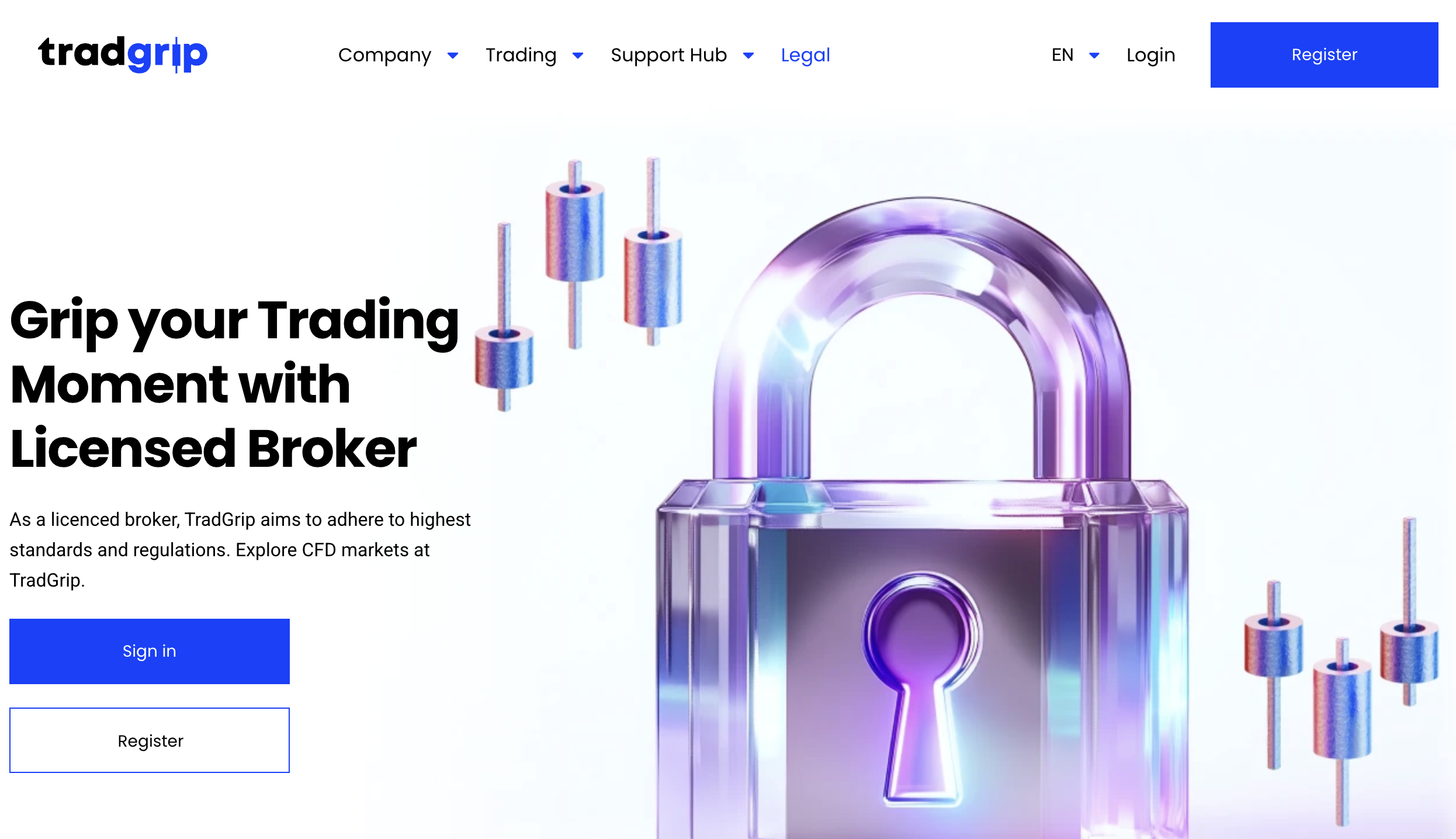
Online trading has opened the door to thousands of new brokers, but with opportunity comes risk. One such broker that has raised red flags is TradGrip.com. Although it presents itself as a professional CFD (contract for difference) trading platform offering a broad range of assets, closer inspection reveals a number of serious concerns. In this blog, we’ll explore TradGrip’s background, the evidence for its possible scam nature, the warning signs, and what you should do if you’re exposed.
1. What Is TradGrip.com?
TradGrip.com markets itself as a full-featured online trading broker, claiming to offer access to forex, stocks, commodities, indices, and cryptocurrencies via CFDs. Its website emphasizes “advanced tools,” “real-time data,” “fast execution,” and “no hidden fees” — all the selling points you might expect from a modern online broker.
However, many analysts and consumer protection sites strongly question TradGrip’s legitimacy.
2. The Red Flags: Why Many Believe TradGrip.com Is a Scam
Here’s a breakdown of the most serious warning signs surrounding TradGrip.com.
2.1 Regulation (or Lack Thereof)
One of the most critical issues is regulatory oversight — or more precisely, the lack of credible oversight:
-
TradGrip.com claims to be regulated via Zenith Markets PLC, supposedly licensed by the Mwali International Services Authority (MISA).
-
However, MISA is not considered a strong, reputable financial regulator. It functions more as a company registrar than a true financial oversight body, lacking rigorous requirements like strict financial reporting or client fund segregation.
-
Without a license from a well-known regulator, there is very limited protection for clients.
In short: TradGrip.com’s claimed “license” is from a weak, offshore regulator. That gives them a veneer of legitimacy — but potentially not much real protection for traders.
2.2 Domain Age, Ownership, and Transparency
-
TradGrip’s domain is very new in the market.
-
The WHOIS (domain registration) data is hidden behind privacy services, which is common among websites that don’t want to reveal who is actually behind them.
-
There is no clear, verifiable corporate headquarters or trustworthy physical address, and the ownership structure is opaque.
New websites with hidden owners = risk. Combined with minimal transparency about the people running TradGrip, this is a classic symptom of potentially fraudulent broker operations.
2.3 Website Risk Score & Other Technical Warnings
Independent risk-assessment tools also flag TradGrip.com as high-risk:
-
Trust scores for the site are very low, with warnings about suspicious domain ties and potential phishing or spam risks.
-
Although the SSL certificate is valid, the overall trustworthiness of the site is questionable.
These aggregated risk indicators strongly caution against trusting the platform without further verification.
2.4 Inconsistent Fees and Hidden Charges
Another red flag comes from inconsistency and opacity around fees:
-
TradGrip.com’s “FAQ” page claims deposits are free, but its client agreement reveals a “3% + $0.25 fee per deposit.”
-
On withdrawals, TradGrip.com’s website claims requests are processed in about 72 hours, but its legal documentation extends this to 5–7 business days.
-
These discrepancies suggest the marketing messages may be deliberately misleading, presenting more favorable terms than the formal, binding ones.
Hidden or contradictory fees are a classic strategy used by shady brokers to trap users or slowly bleed their capital.
2.5 Aggressive Sales Tactics & False Promises
Many scam broker reviews mention pushy salespeople, and TradGrip.com is no exception:
-
Users have reported “account managers” pressuring them to deposit more money quickly, citing “time-limited” opportunities or “special” statuses.
-
There are marketing promises of “guaranteed” or “very high” returns with minimal risk — a huge red flag. Legitimate brokers never guarantee profits because markets are inherently risky.
-
These tactics are well-known in the world of fraudulent investment sites: they create urgency, promise large gains, and try to lock in deposits before victims can verify the broker.
2.6 Withdrawal Issues & Account Freezing
Arguably the most alarming issue is reports around withdrawing money:
-
Many users report that once withdrawals are requested, TradGrip.com becomes unresponsive, delays, or refuses to release funds.
-
Users are sometimes told to pay additional fees in order to unlock their funds.
-
In some cases, accounts were frozen or permanently locked out after withdrawal attempts.
-
These tactics align with classic “advance fee” or “withdrawal block” scams where the broker never intends to release the money.
2.7 Manipulated Reputation & Fake Reviews
Examining TradGrip.com’s online reputation uncovers worrying patterns:
-
Many positive reviews appear to have template-like language — lacking specificity about real trading experience.
-
Some reviews may be orchestrated or manipulated to build a façade of legitimacy and hide complaints.
-
The discrepancy between “glowing marketing” and “real user distrust” suggests a curated reputation rather than authentic community trust.
2.8 Offshore Jurisdiction and Weak Investor Protection
Because TradGrip.com seems to base its operations in an offshore jurisdiction, investor protections are minimal:
-
Offshore regulators such as MISA lack rigorous consumer protection mechanisms seen in major financial markets.
-
In case of disputes, losses, or fraud, clients may have very limited legal recourse. It’s expensive and complex to pursue recovery against unregulated or loosely regulated entities.
-
Offshore registration can be a red flag for legitimacy, or at least for how seriously a broker treats its regulatory responsibilities.
2.9 Data Risk and Identity Exposure
Some scam broker investigations point out that account verification often requires identity documents:
-
When users upload these to a dubious broker, they risk gross misuse of personal data — identity theft, fraud, or resale of documents.
-
Because everything about TradGrip.com’s ownership is opaque, it’s unclear how securely their client data is stored, processed, or protected.
3. Comparing What TradGrip.com Claims vs What Evidence Shows
To better illustrate the mismatch, here’s a side-by-side comparison between TradGrip.com’s marketing and what investigations reveal:
| What TradGrip Claims | What Investigations Show |
|---|---|
| Licensed broker, “no hidden fees” | License via MISA (weak regulator) + deposit & withdrawal fee inconsistencies |
| Fast withdrawals (72 hours) | Legal terms: 5–7 business days, plus reports of blocked or frozen withdrawals |
| Transparent operations / company info | WHOIS data hidden; no verified leadership; lack of transparency about corporate structure |
| High returns, “instant execution” | Reports describing unrealistic profit promises, high-pressure sales tactics |
| Trusted, reputable broker | Very low trust score; manipulated reviews flagged |
4. Real-World User Experiences & Complaints
Beyond technical and regulatory analysis, user reports highlight consistent complaints:
-
Withdrawal Refusals / Delays
Users can deposit funds easily, but withdrawals often result in delays, excuses, or additional fee demands. -
Account Locking / Freezing
Accounts may be frozen or locked entirely after withdrawal attempts. -
Aggressive Onboarding
“Account managers” use pressure tactics to get users to deposit quickly. -
Loss of Capital
Many users report being unable to recover the money they deposited. -
Poor Customer Service
Customer support is often slow, evasive, or unhelpful.
While some users report no immediate issues, the volume and consistency of negative reports are deeply concerning and align with classic broker scam behavior.
5. Why Fraudsters Use Platforms Like TradGrip.com
To understand why TradGrip.com might be structured as it is, consider typical motivations behind broker scams:
-
Ease of Set-Up
Offshore licensing allows fraudsters to register a broker legitimately without real oversight. -
High-Profit Illusion
Fake profit numbers or cherry-picked gains lure traders into depositing more funds. -
Deposit Pressure
Once a deposit is made, account managers push users to invest more. -
Withdrawal Barriers
When withdrawals are requested, additional fees or delays prevent users from accessing their funds. -
Quick “Disappear and Rebrand”
New domains allow fraudsters to vanish or rebrand after collecting funds. -
Identity Harvesting
Requiring KYC documents can be misused for identity theft or resale of personal data.
6. Lessons for Traders: How to Avoid Falling Victim
Even if someone hasn’t yet interacted with TradGrip.com, there are broader lessons for all traders:
6.1 Verify Regulation
-
Ensure a broker is registered with a credible financial regulator.
-
Do not rely on obscure or unknown authorities.
-
Verify the license directly with the regulator, not just through marketing claims.
6.2 Do Due Diligence on the Domain & Company
-
Use domain lookup tools to check domain age and ownership.
-
Be cautious if ownership is hidden or company details are vague.
-
Verify corporate registration and physical headquarters.
6.3 Read the Fine Print
-
Read client agreements, terms & conditions, and risk disclosures.
-
Look for hidden charges, withdrawal conditions, and account closure policies.
-
Trustworthy brokers make these documents transparent and consistent.
6.4 Test Withdrawals Early
-
Deposit a small amount first and attempt a withdrawal.
-
Delays or refusal are strong warning signals.
-
Keep records of all interactions with the broker.
6.5 Use Independent Review Sources
-
Check risk-analysis websites and independent forums.
-
Be wary if positive reviews seem templated and negative reviews are consistent in theme.
6.6 Protect Your Personal Data
-
Only share identity documents with regulated brokers.
-
Use secure networks when submitting sensitive information.
-
Understand how the broker stores and protects your data.
7. Final Verdict: Is TradGrip.com a Scam?
Considering the evidence — weak regulation, opaque ownership, hidden costs, withdrawal issues, aggressive sales tactics, and poor online reputation — TradGrip.com is not a trustworthy broker.
While definitive proof of a scam may require a legal ruling, the risk profile is extremely high. For retail traders, engaging with TradGrip.com is highly risky and should be avoided.
8. Broader Lessons from the TradGrip.com Case
-
Regulation matters — offshore “licenses” are not substitutes for proper oversight.
-
Due diligence is essential — a slick website does not guarantee safety.
-
Transparency is key — legitimate brokers provide clear company info and fee structures.
-
Trust but verify — test deposits and withdrawals before committing funds.
-
Community and oversight help — independent reviews and forums provide valuable insights.
9. Conclusion
TradGrip.com raises too many red flags to be treated as a legitimate broker. Its offshore structure, hidden fees, withdrawal problems, and aggressive sales tactics make it highly risky. Traders should avoid this platform entirely.
In online trading, careful research and skepticism are your strongest tools. A promising website alone is never enough to guarantee safety.
Report TradGrip.com Scam and Recover Your Funds
If you have lost money to TradGrip.com, it’s important to take action immediately. Report the scam to LOSTFUNDSRECOBERY.COM, a trusted platform that assists victims in recovering their stolen funds. The sooner you act, the better your chances of reclaiming your money and holding these fraudsters accountable.
Scam brokers like TradGrip.com continue to target unsuspecting investors. Stay informed, avoid unregulated platforms, and report scams to protect yourself and others from financial fraud. Read More reviews at Scams2Avoid