Introduction
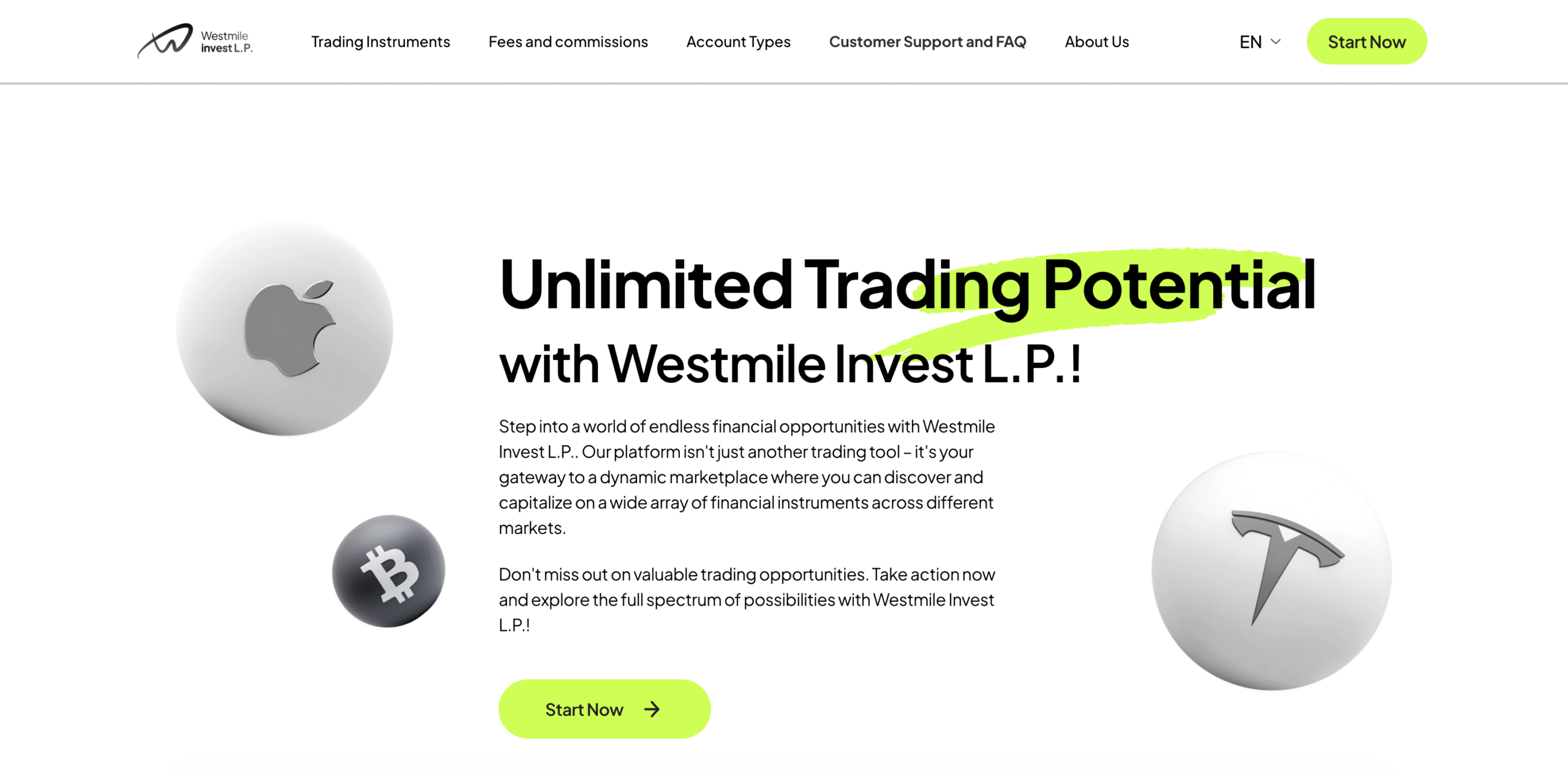
In a digital era where investment opportunities multiply by the day, online trading platforms have become incredibly popular. Some of these services are legitimate, transparent, and licensed; others appear professional on the surface but conceal serious risks beneath polished marketing. One platform that has recently drawn intense scrutiny is Westmile.pro, also calling itself Westmile Invest L.P.
Many users have raised concerning claims about the platform’s operations, withdrawal practices, and legitimacy. This detailed review examines those concerns, the red flags around the platform, how it allegedly targets investors, and what you should know before going anywhere near it.
1. What Westmile.pro Claims to Be
Westmile.pro presents itself as a modern, global, high-performance trading and investment platform. It advertises access to various markets such as forex, commodities, crypto, indices, and more. Its website design aims to appear professional and well-structured, giving newcomers the impression that the platform is sophisticated and trustworthy.
However, a closer examination reveals that many claims made by the platform lack the verification and transparency expected of a legitimate financial institution. Basic regulatory and operational details that reputable brokers openly publish are missing or vague, raising immediate concerns.
2. Major Red Flags Identified
a. Overwhelmingly Negative User Reviews
Across multiple independent user-review spaces, the sentiment toward Westmile.pro is consistently negative. When the majority of users report similar troubling experiences—especially regarding withdrawals—this becomes a critical indicator that the platform may not be operating legitimately.
Repeated complaints describe a series of issues, including pressure to deposit larger amounts, rapid changes in account managers, and sudden unresponsiveness once a user attempts to retrieve funds.
b. Poor Trust Scores From Independent Evaluation Sites
Several scam-analysis and website trust-check tools flag Westmile.pro as a high-risk platform. These evaluations typically look at factors such as:
-
Hidden ownership information
-
Recently created domains
-
Lack of transparency
-
Unknown corporate structure
-
Low site traffic and poor web reputation
Such indicators usually align with websites that attempt to appear credible while avoiding accountability.
c. Security Risk Indicators
Some cybersecurity scanners classify the domain as suspicious or high-risk. Several factors can contribute to this classification:
-
Short domain age
-
Private WHOIS information
-
No verifiable corporate documentation
-
Potential blacklisting indicators
-
Artificially inflated marketing claims
For a platform claiming to handle global financial investments, failing basic transparency checks raises major doubts.
d. Consistent User Claims of Withdrawal Problems
A recurring pattern appears in user reports:
Customers say that withdrawing funds becomes a complicated and almost impossible process.
Many users describe the following:
-
Being asked to pay unexpected additional fees
-
Claiming funds are “held” until certain payments are made
-
Being told about regulatory delays that never resolve
-
Being pressured to deposit more to “activate” withdrawals
Some alleged that they paid large amounts—sometimes dozens of times—without ever receiving their money back. Requests for withdrawals appear to trigger escalating demands instead of successful payouts.
e. Lack of Verified Regulation
One of the most significant concerns is the absence of clear regulatory oversight. Real trading platforms must operate under strict financial regulations, and they are legally required to display:
-
Regulatory body
-
License numbers
-
Company registration
-
Address and jurisdiction
Westmile.pro does not provide verifiable licensing information. For an investment service, this is an immediate and severe red flag.
f. High-Pressure Sales Tactics
Multiple users describe being contacted repeatedly by “account managers” who aggressively encourage them to:
-
Deposit more money
-
Increase the size of their trades
-
Upgrade their account level
-
Participate in exclusive investment “opportunities”
Such tactics are often associated with boiler-room style operations—not legitimate financial advisors.
g. Suspected Fake Reviews
Some reviewers have pointed out that the rare positive reviews appear suspiciously generic, out of place, or inconsistent with typical user behavior. This kind of artificially inflated social proof is commonly seen in fraudulent trading platforms trying to mask their poor performance.
Positive testimonials alone are not concerning, but a mixed pattern of overwhelmingly negative reports with a few suspiciously glowing ones is characteristic of manipulative PR strategies used by questionable operations.
3. How the Alleged Scam Appears to Operate
By compiling common complaints, a pattern emerges that resembles many known online investment frauds. While each victim’s experience may differ, the general flow appears to follow this model:
1. Initial Attraction
The scam reportedly begins with:
-
Social media ads
-
Cold calls
-
Messages from so-called “advisors”
-
Promises of guaranteed profits or high returns
-
Professional-looking websites and dashboards
New investors are encouraged to deposit an initial sum, often a moderate amount to reduce suspicion.
2. False Sense of Security
Once money is deposited:
-
The account dashboard displays impressive gains
-
Trades appear to be profitable
-
Account managers reassure investors frequently
-
Investors are encouraged to deposit more for even larger returns
This stage builds trust and makes the investor believe they made a great choice.
3. The Withdrawal Trap
When investors try to withdraw money, the situation changes dramatically. Many report tactics such as:
-
Claims of regulatory compliance issues
-
Requests for extra payments (“certification fees”, “taxes”, “clearance charges”, etc.)
-
Assurances that paying these fees will release funds
-
New issues appearing after each payment
-
Delays blamed on banks, international regulations, or system outages
This is where most victims realize something is wrong—but by then, they may have already sent substantial funds.
4. Manipulation and Pressure
If investors hesitate or refuse to pay:
-
Account managers allegedly become more aggressive
-
Calls and messages intensify
-
Investors may be threatened with losing their funds unless they comply
-
New “managers” may replace old ones without explanation
-
Communication becomes erratic or unprofessional
These behaviors are typical of financial fraud operations that rely heavily on psychological manipulation.
5. Final Stage: Disappearance
Once the scammers extract as much money as possible:
-
Communication slows or stops
-
Accounts may get locked
-
The platform may block withdrawals entirely
-
Login credentials may stop working
-
The investor is left with no funds and no support
Without regulatory oversight or a verified company behind the platform, victims have no realistic way to pursue accountability.
4. Real User Experiences (Summarized Without Names)
The most telling warnings come from real individuals who claim to have interacted with the platform. Here are some repeated themes from user accounts (names excluded for privacy):
“I paid multiple times but never got my withdrawal.”
Many users report paying extra fees on top of their initial investments, often dozens of times, trying to get a small portion of their profits—but nothing was ever sent back.
“They kept changing my account manager.”
Some described dealing with many different people, all claiming to be their advisor. Each new manager had a different story or explanation.
“I was pressured constantly to invest more.”
Several users say they were bombarded with daily phone calls urging larger investments, new opportunities, or urgent upgrades.
“As soon as I asked to withdraw, they stopped cooperating.”
For many, the moment they requested their money—not even profits, but initial deposits—the relationship deteriorated abruptly.
“The trading results seemed fake.”
Some investors noted that the profits shown looked unrealistic or inconsistent, raising doubts about whether any real trading was happening.
“Once they got enough money, they disappeared.”
The final stage for many victims was complete silence. Email replies stopped, calls went unanswered, and dashboards stopped functioning.
These experiences mirror well-documented patterns seen in fraudulent investment operations.
5. Ethical and Legal Concerns Surrounding Westmile.pro
Taking into account the platform’s behavior, several ethical and regulatory issues are evident:
1. No verifiable regulatory license
Legitimate brokers operate under strict rules. Westmile.pro provides no trustworthy proof of regulation.
2. Opaque ownership and structure
The lack of transparency on corporate details suggests purposeful concealment.
3. Use of manipulation tactics
Pressuring individuals to deposit more or blocking withdrawals when they try to retrieve money is highly unethical.
4. Absence of audited financial information
A credible investment platform should publish financial statements, ownership records, or audit reports—none appear to exist.
5. Potential use of fake profits
Showing fabricated trading results to entice more deposits is a hallmark of fraud.
6. Should You Trust Westmile.pro?
Based on the overwhelming evidence presented by users, security analysts, and trust-evaluation tools, the conclusion is clear:
Westmile.pro exhibits multiple characteristics of a high-risk, potentially fraudulent trading platform.
The combination of:
-
Withdrawal obstructions
-
High-pressure deposit tactics
-
Lack of regulation
-
Hidden ownership
-
Poor trust ratings
-
Repeated user accusations
creates a strong argument that individuals should avoid investing their money through this service.
Conclusion
Westmile.pro markets itself as a sophisticated trading and investment service, but the patterns emerging from user reviews and independent assessments paint a far more troubling picture. Issues with withdrawal, manipulative sales behavior, nonexistent regulation, and opaque company structure raise major concerns about the legitimacy of the platform.
While every investor must ultimately make their own decisions, the consensus among users and analysts is clear: Westmile.pro should be approached with extreme caution—if at all.
When it comes to your money, especially online, transparency, licensing, and trustworthiness are non-negotiable. Westmile.pro does not convincingly demonstrate any of these.
Report Westmile.pro Scam and Recover Your Funds
If you have lost money to Westmile.pro, it’s important to take action immediately. Report the scam to LOSTFUNDSRECOBERY.COM, a trusted platform that assists victims in recovering their stolen funds. The sooner you act, the better your chances of reclaiming your money and holding these fraudsters accountable.
Scam brokers like Westmile.pro continue to target unsuspecting investors. Stay informed, avoid unregulated platforms, and report scams to protect yourself and others from financial fraud. Read More reviews at Scams2Avoid
Stay smart. Stay safe.